Today I’ll share the photos of how the boots were built so you can learn a little about cowboy boot construction.


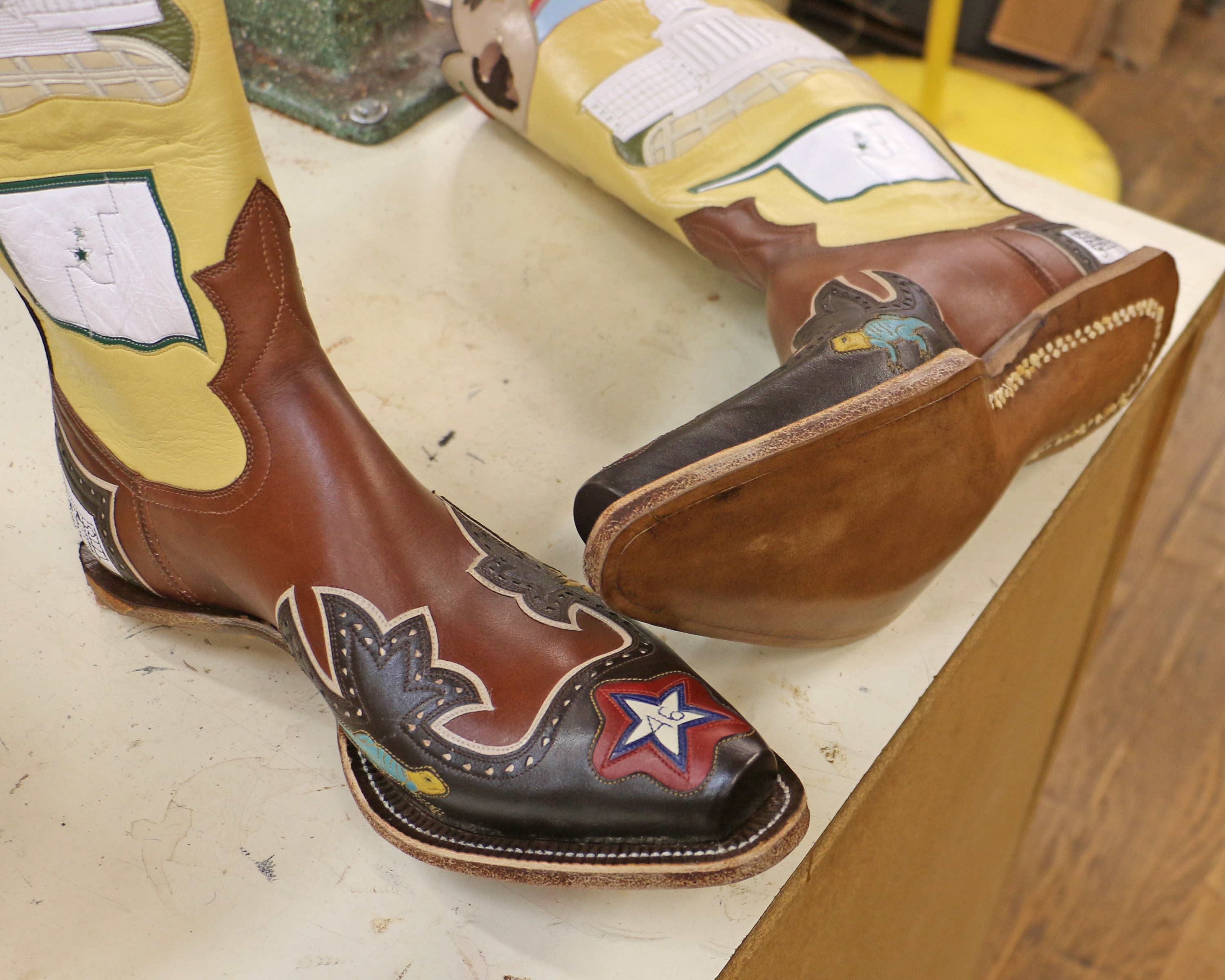
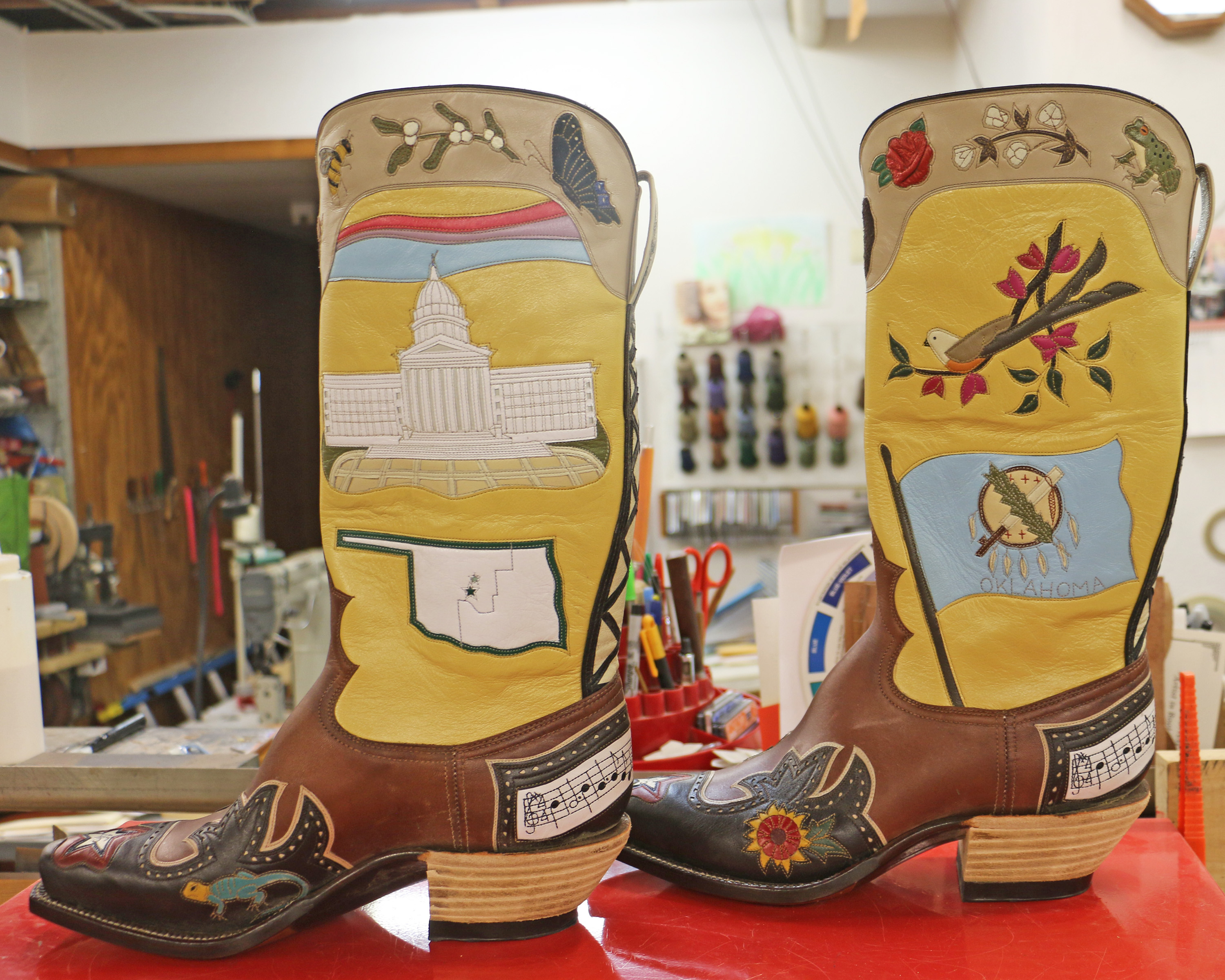

Today I’ll share the photos of how the boots were built so you can learn a little about cowboy boot construction.
Day Six: the making of the Oklahoma Boots, which are now part of the Oklahoma State Capitol permanent art collection
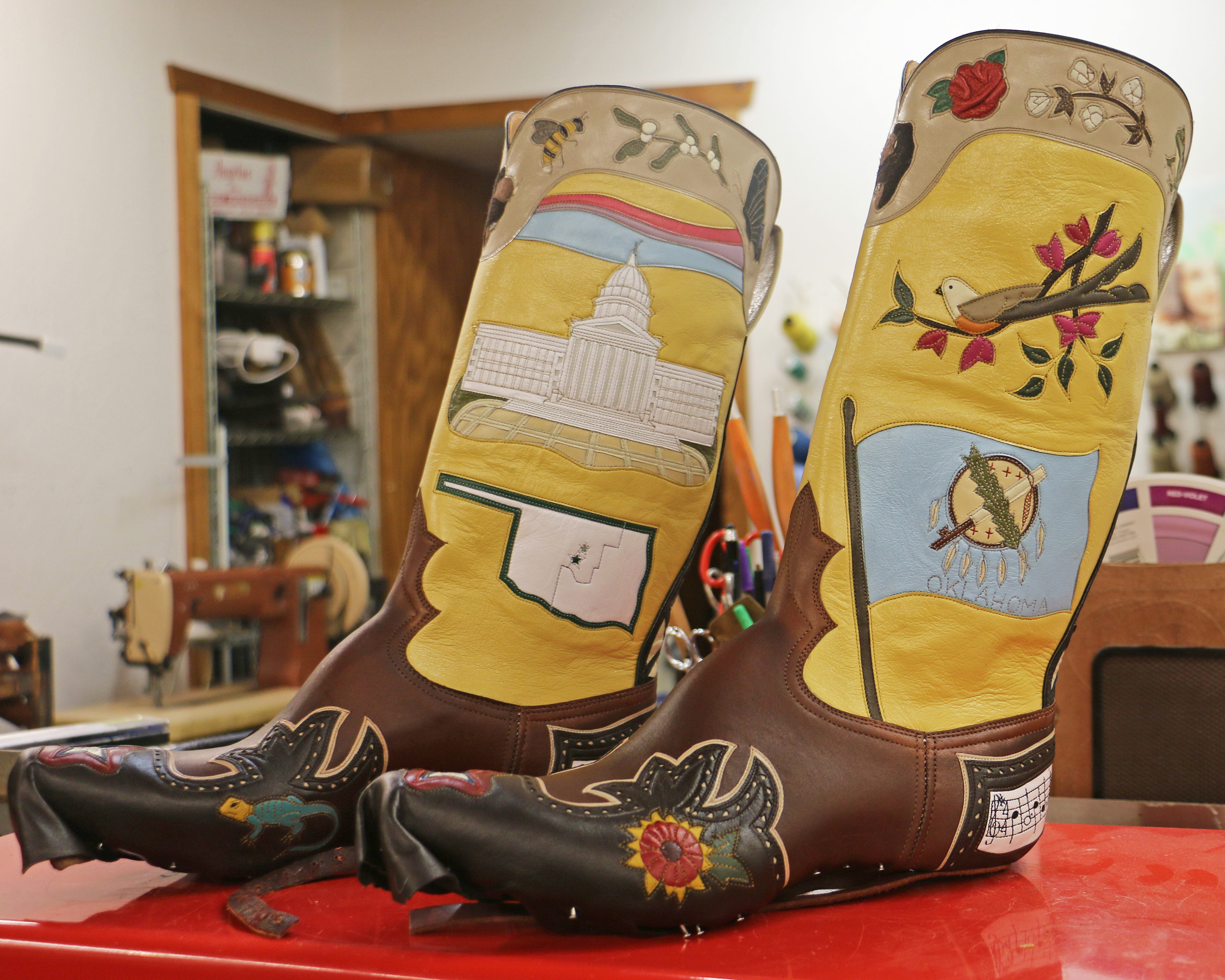
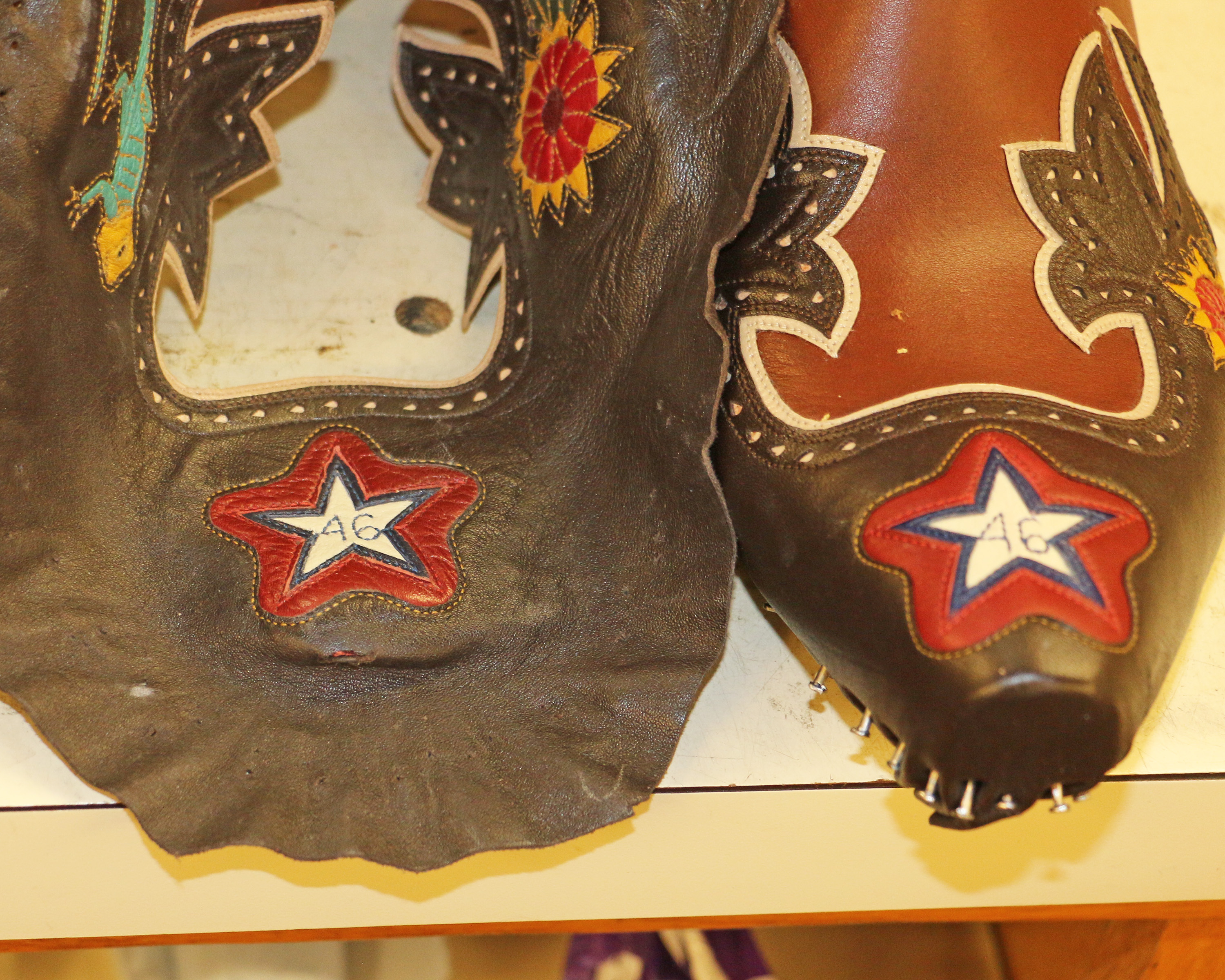
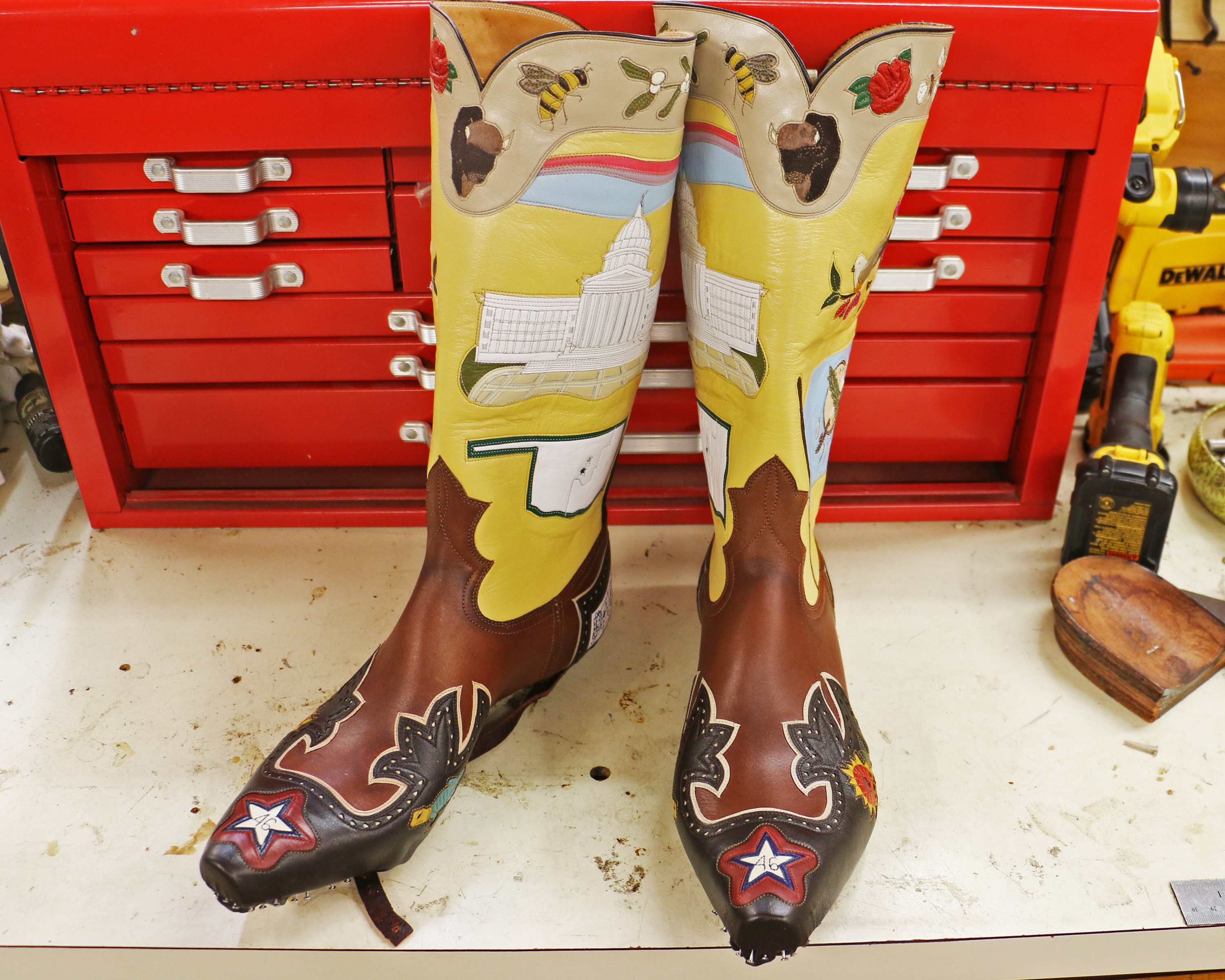
It felt really good to last the Oklahoma boots and see them finally begin to look like an actual pair of boots, but it only took a brief moment for this day turned sad and stressful.
Day Five: the making of the Oklahoma Boots, which are now part of the Oklahoma State Capitol permanent art collection
At this point in the process all of the decorative work is done and each piece is completed; now it’s time to begin putting all the pieces together.

Day Four: the making of the Oklahoma Boots, which are now part of the Oklahoma State Capitol permanent art collection
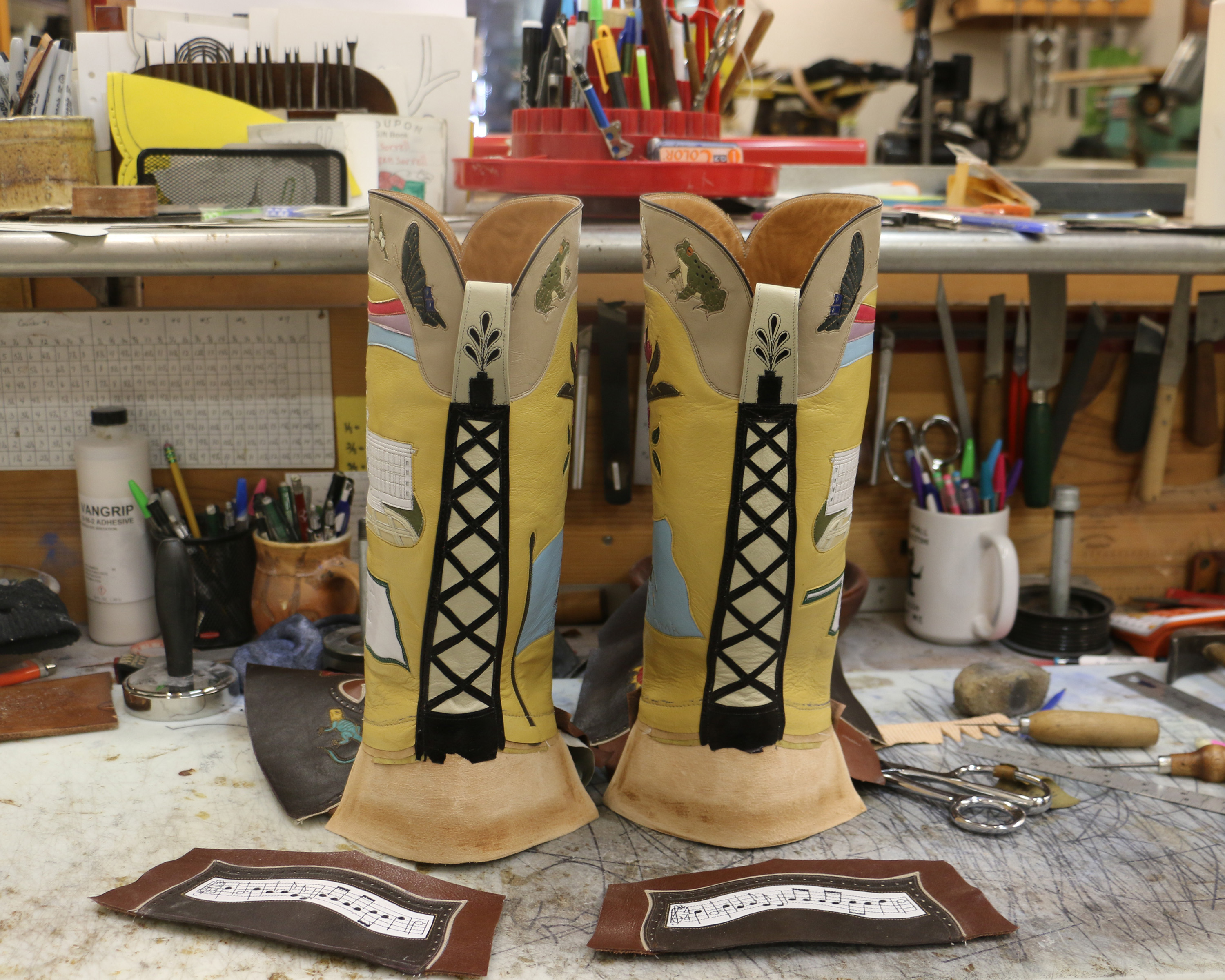
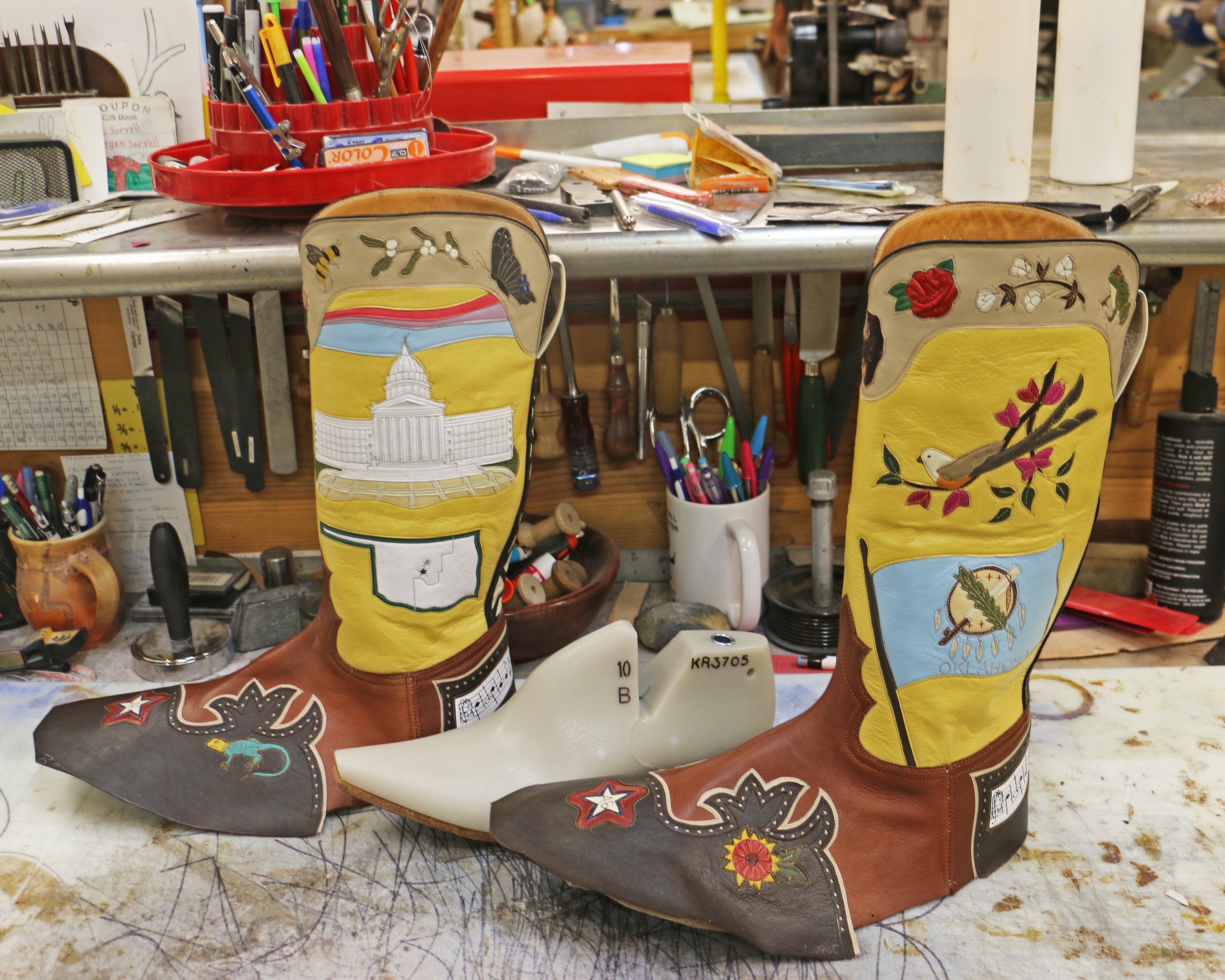
Today I’m going to talk a little bit about the wing and counter tips and their design inspiration.

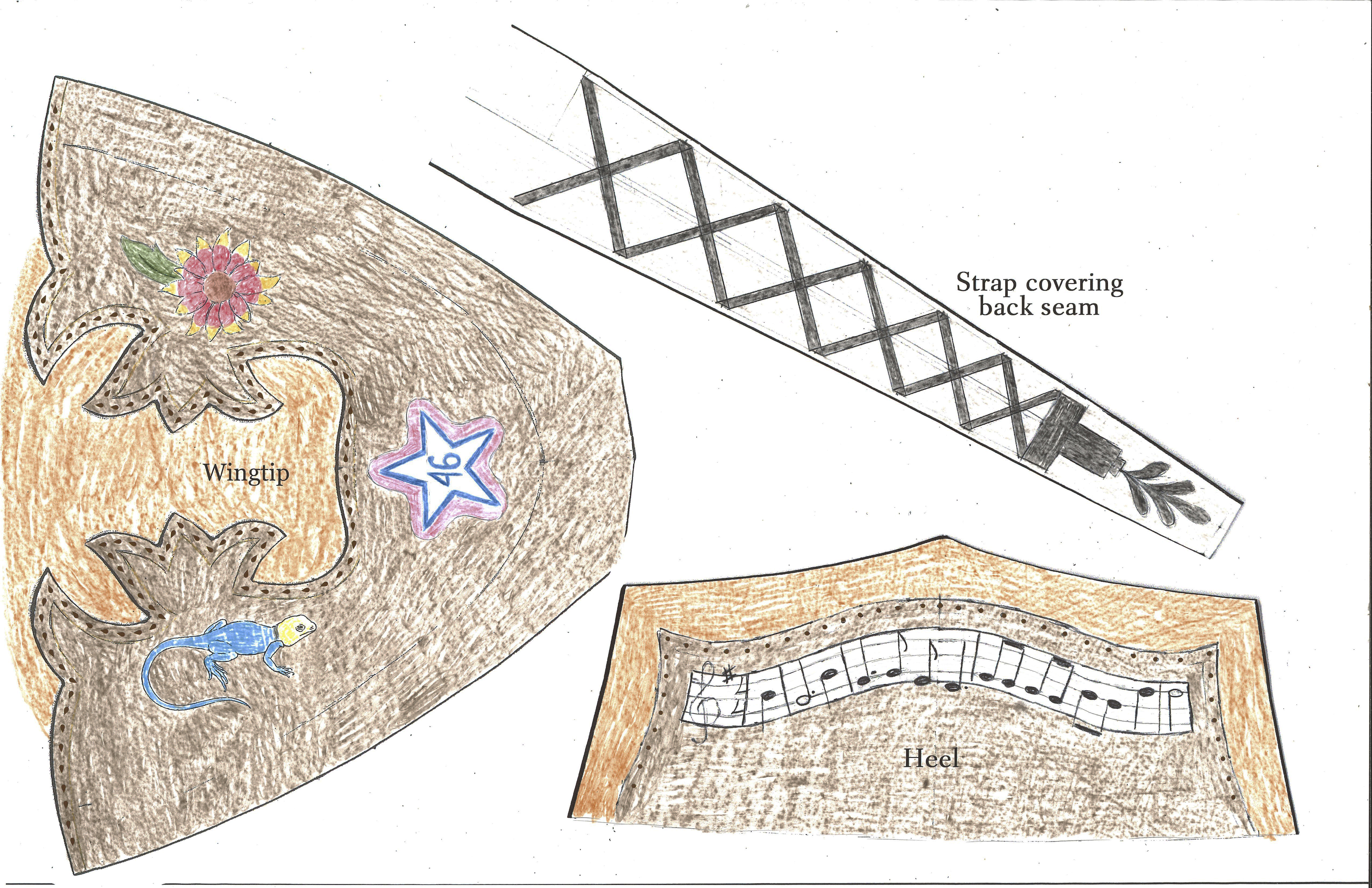
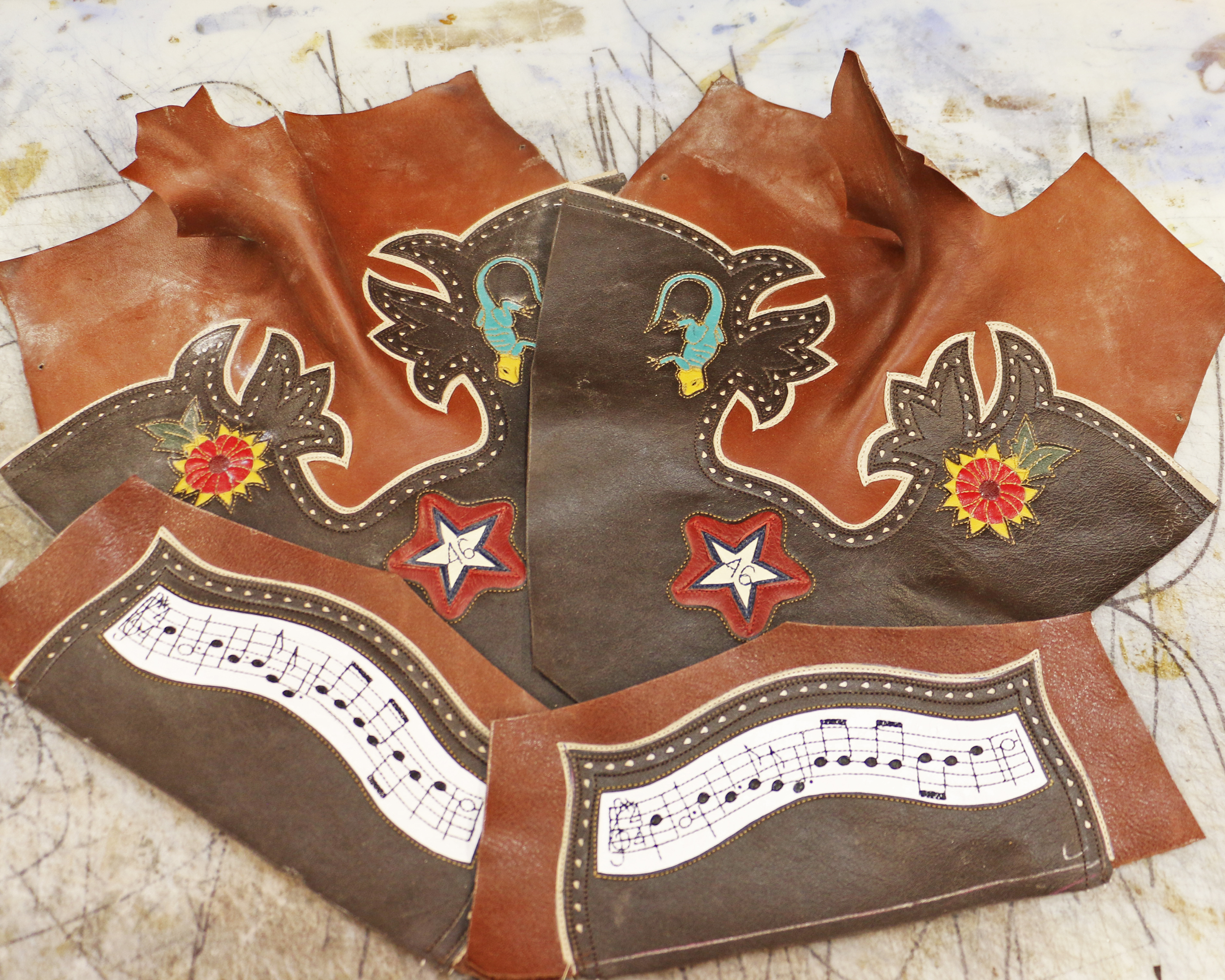
The countertip is the design part that goes on the heel area; it features the first line of Oklahoma’s official gospel song “Swing Low, Sweet Chariot.” This song was written by Wallace Willis, an enslaved Oklahoma man. There were dreams of Oklahoma becoming an all-Black state — a place to be free and own land and escape the shattered dreams of Reconstruction in the south. Oklahoma has many historically Black towns and is also home to Langston University, a historically Black college that opened in 1897. The counter tip is in memory of the many Black Oklahomans who sought freedom here.
The wingtip is the decorative part over the toe. A traditional boot making technique is a line of little round holes along an edge; these are called perforations. If you look closely you’ll see that the perforations on the wingtip are teardrops. This is in memory of the Trail of Tears, the forced removal of over 60,000 Native Americans from their homes to Indian Territory, which is now Oklahoma. The teardrops honor the ones who died on these marches, and the ones who survived.
Day Three: the making of the Oklahoma Boots, which are now part of the Oklahoma State Capitol permanent art collection
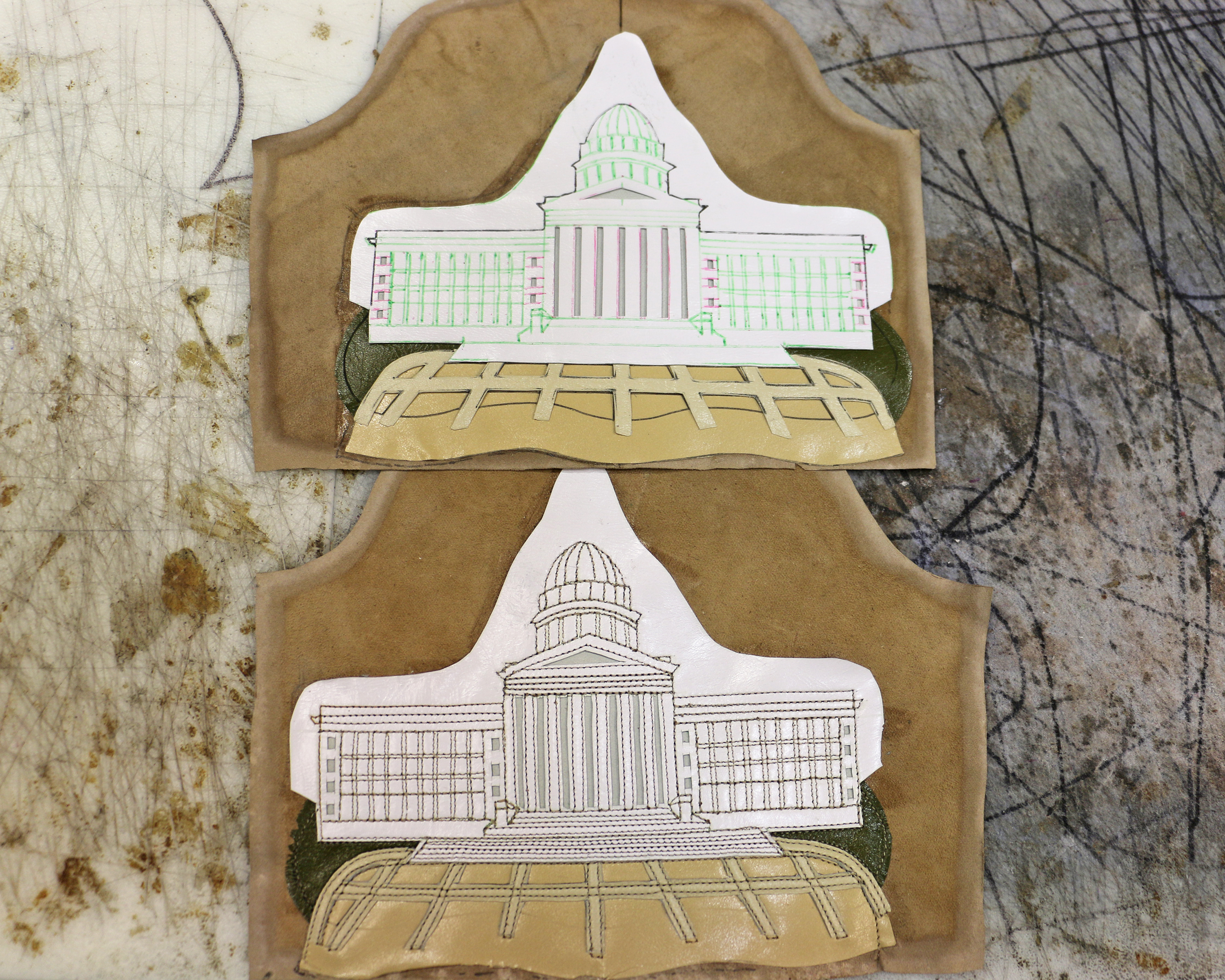
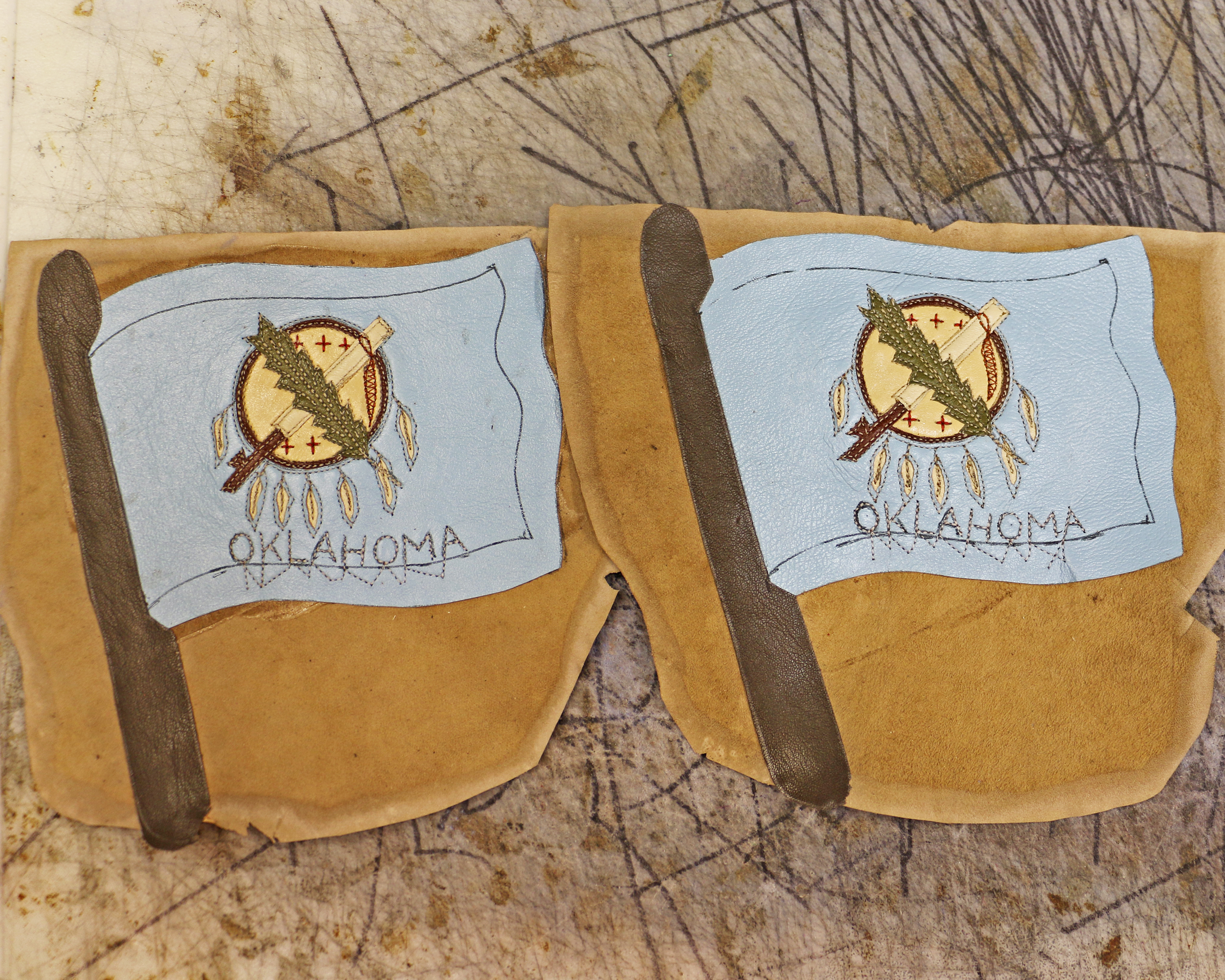
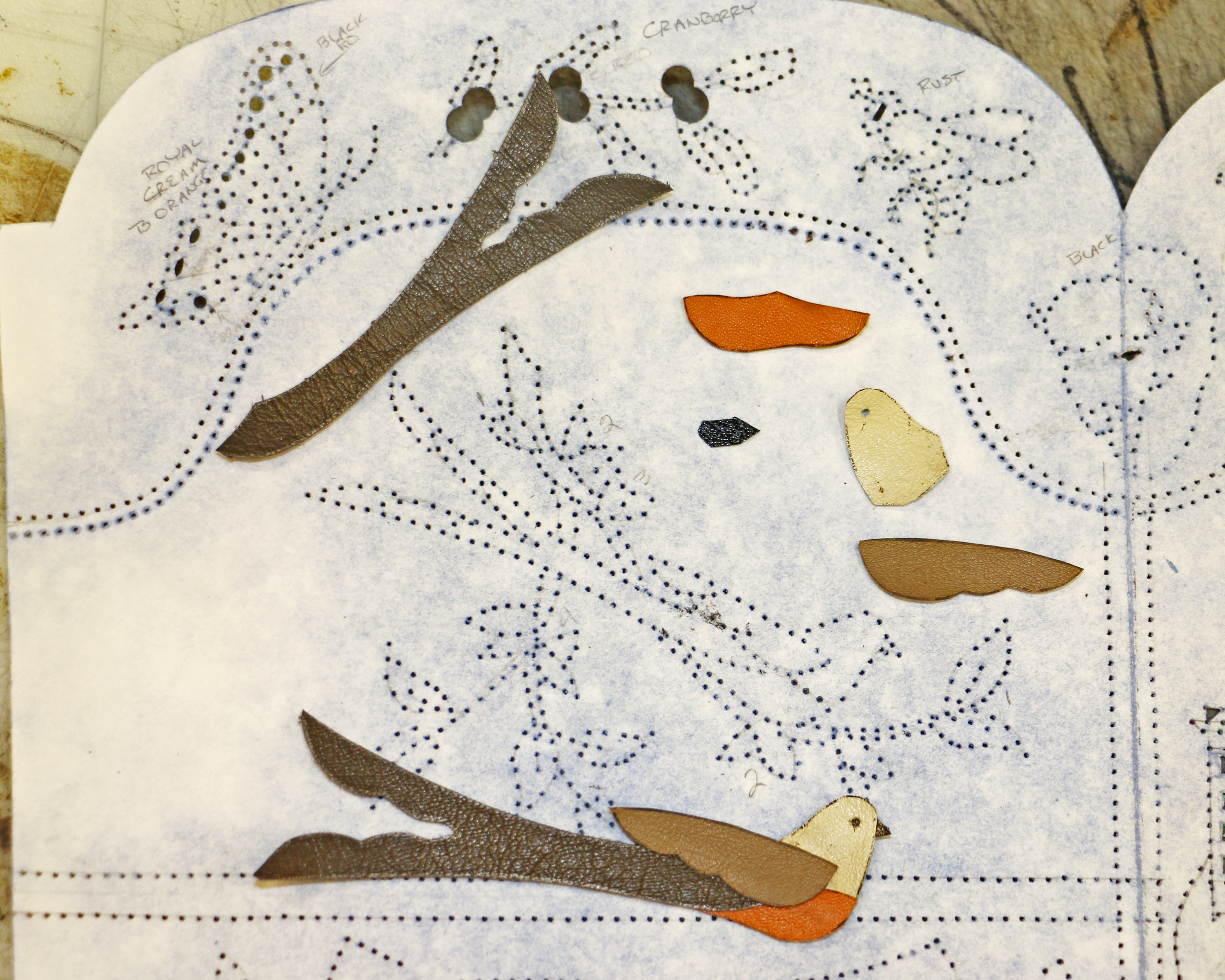
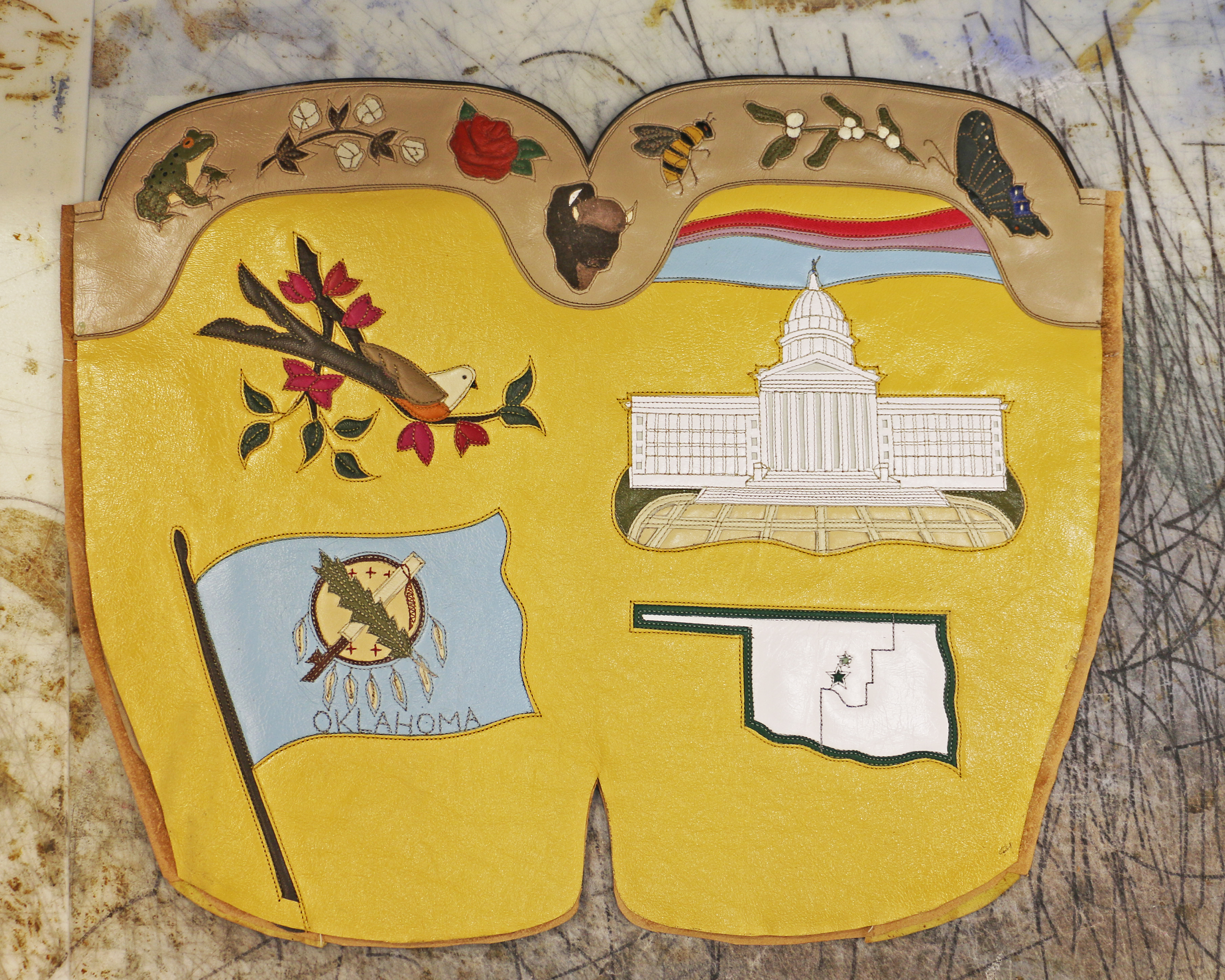
A one-piece boot top is one big panel of leather; the only seam is designed to go up the center back. Stitching lots of tiny details on a one-piece boot top is not too much fun because the piece is too big to fit easily through the throat of a sewing machine, and decorative stitching requires much repositioning of the work. For this reason I did as much of the stitching as possible before sewing it all together.
Day Two: the making of the Oklahoma Boots which are now part of the Oklahoma State Capitol permanent art collection
The Oklahoma boots have a one-piece top; instead of a seam up each side of the boot there’s a single seam in the center back. Omitting the side seam provides two large areas for design. With a normal side seam construction, the area for design is kind of an H shape because the top dips down and the tongue reaches up, narrowing the center design space. Squeezing the Capitol or the flag into the space between the top band and the tongue would have been difficult.

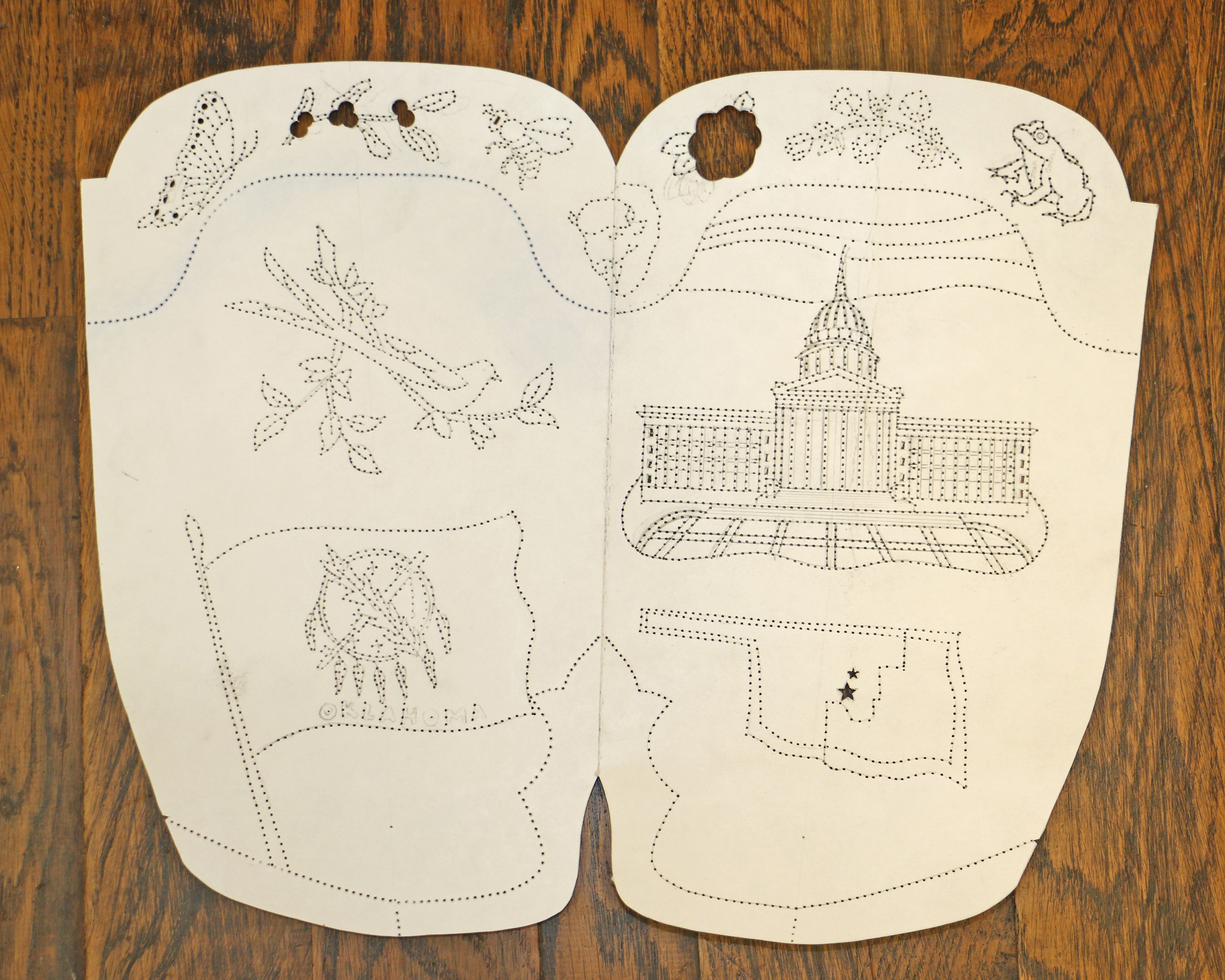

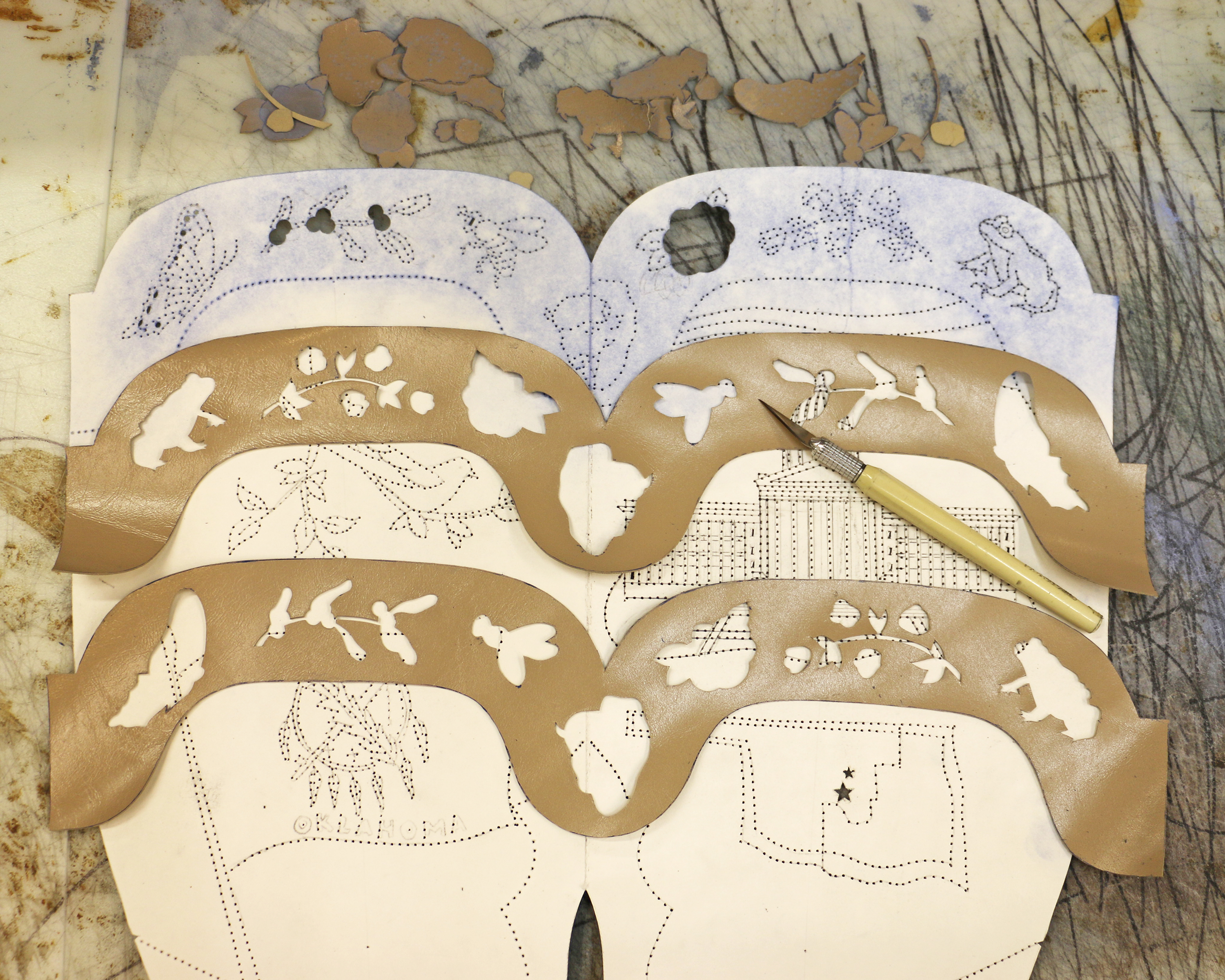
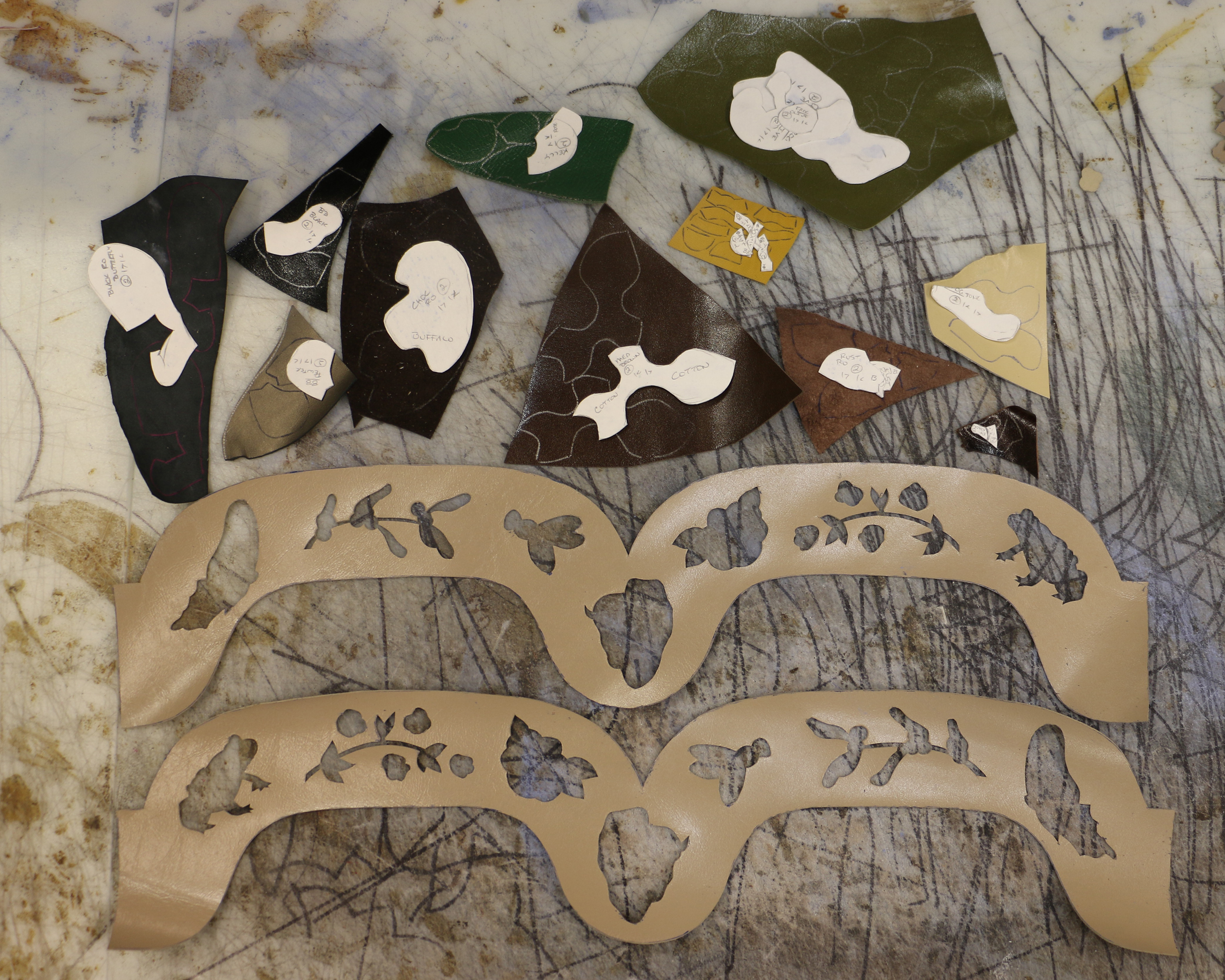

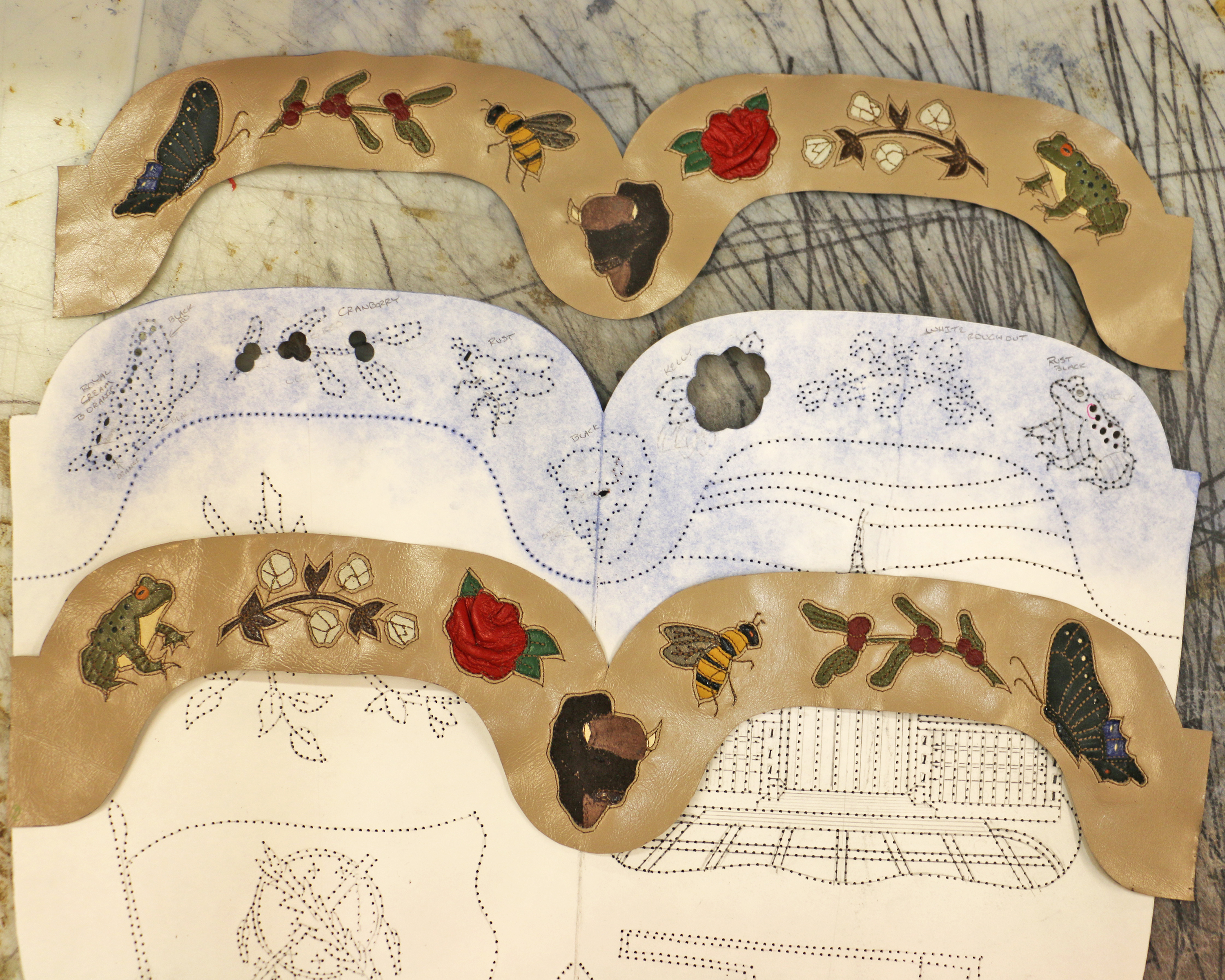
The time has arrived and I can finally share pictures of the Oklahoma boots!
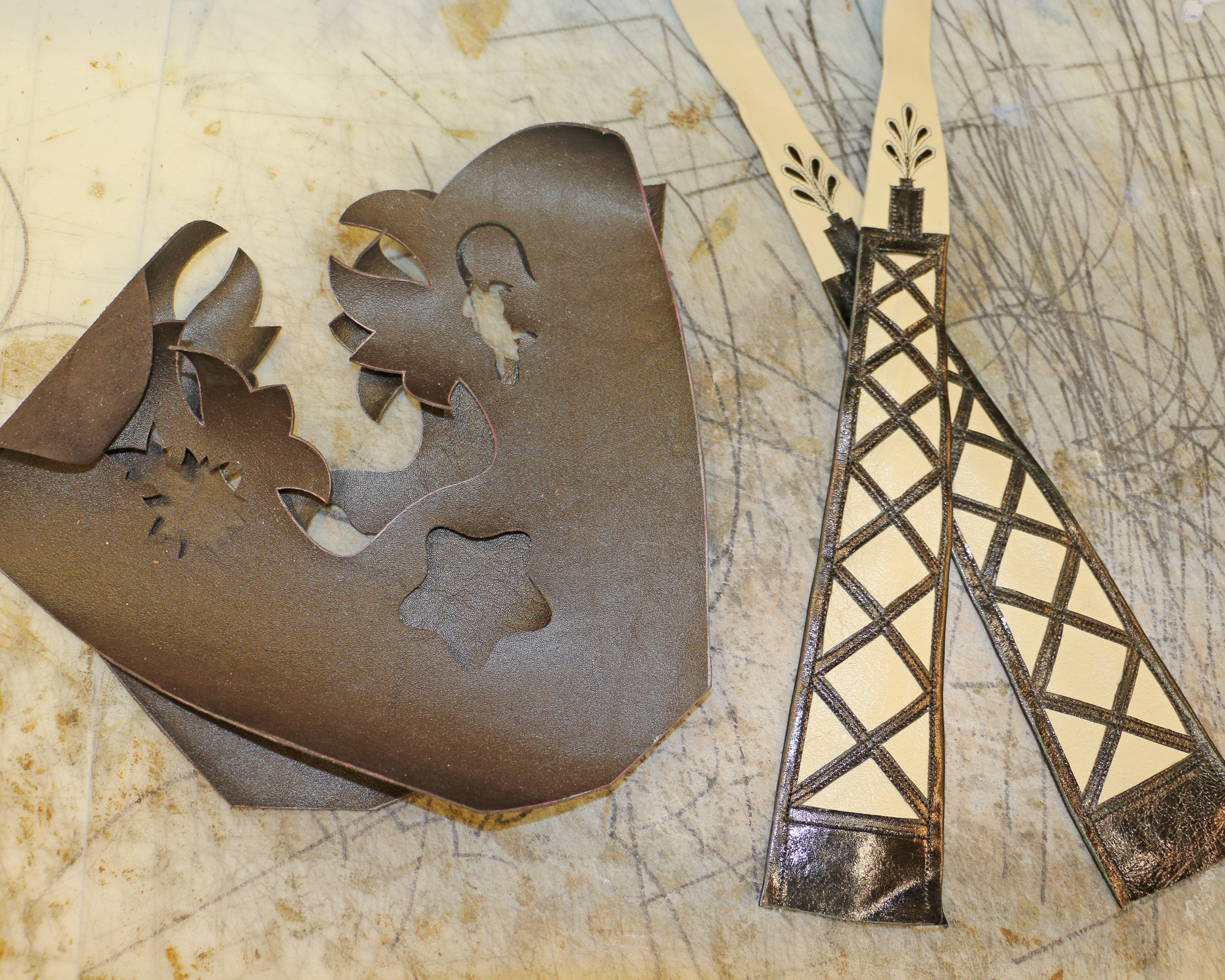
I’ll start with the design sketches I sent to the Oklahoma Arts Council for approval and how those sketches went from paper to leather. These are the sketches for the wingtip, countertip (heel decoration), and decorative strap to cover the back seam.
I’ll post more about the design and the significance of small details when I reveal the completed boots.


Title: :”Somewhere in Kansas”

Most of my clients would choose something from my portfolio and change it up a bit if they had ideas, but I had one customer that always wanted to give me some ideas and have me design something completely new just for her. She and her husband commissioned several pairs of boots and I used to be apprehensive about her orders every time — she was LOVELY, but I felt very inadequate as an artist and designing something new on demand scared me. Looking back now, I appreciate how she forced me out of my comfort zone. This pair of boots is an excellent example of how, with her encouragement and support, I surprised myself sometimes!
Title: “When My Blue Moon Turns to Gold Again”
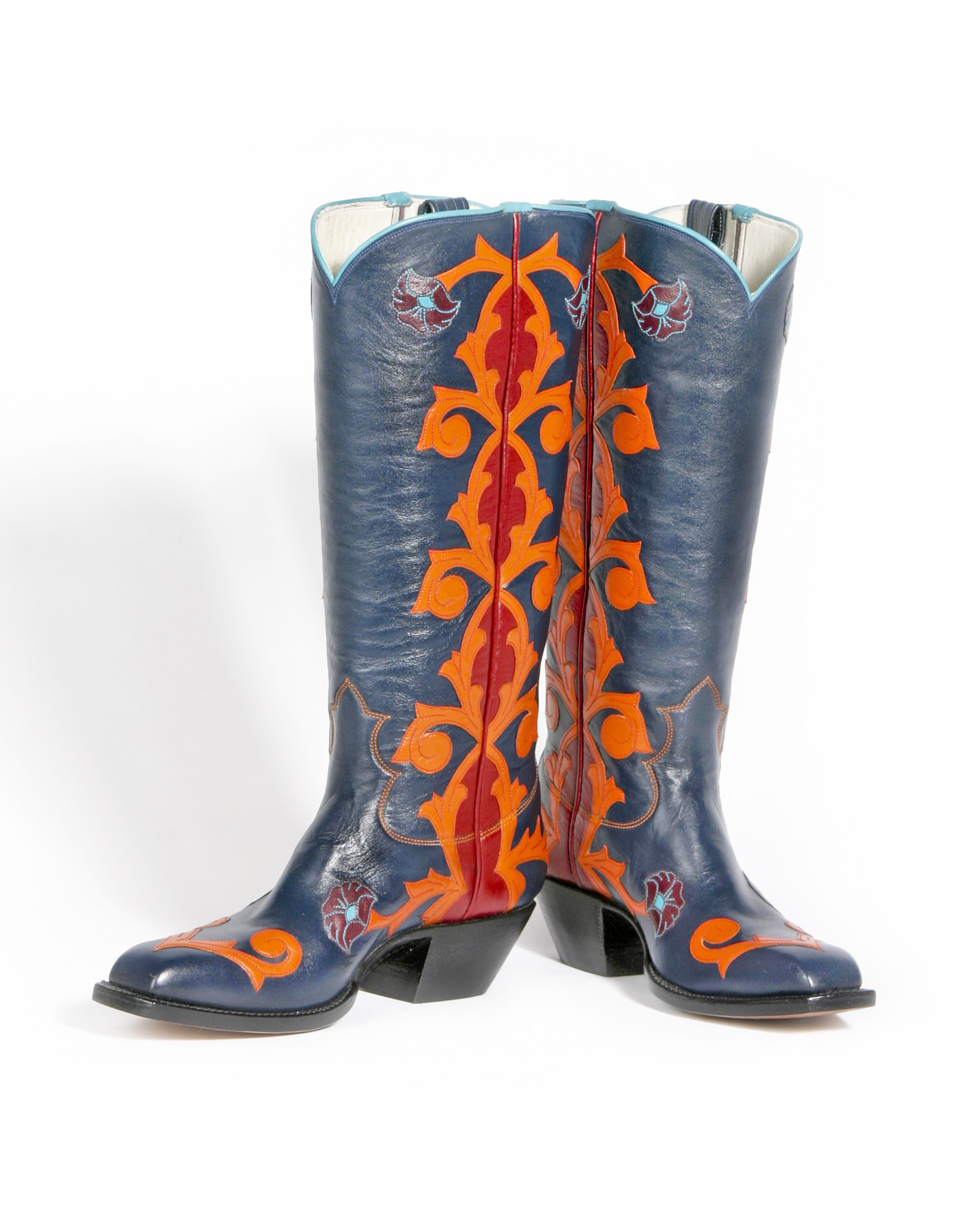
The Oklahoma boots are finished and I’ll deliver them today. I am so eager to share the photos with you! Until I have permission, I’ll just share the photo of the card I include with all my boots.

 | customboots on Challenge |
 | pleasantlyconnoisseu… on Challenge |
| customboots on Challenge |
| Eugen T. on Challenge |
 | Mike McCanna on Lessons |

