Both cowboy boots are side seamed now, and both lace-up boots are lasted. The little lace-up boots fought back and I’m glad to be done.
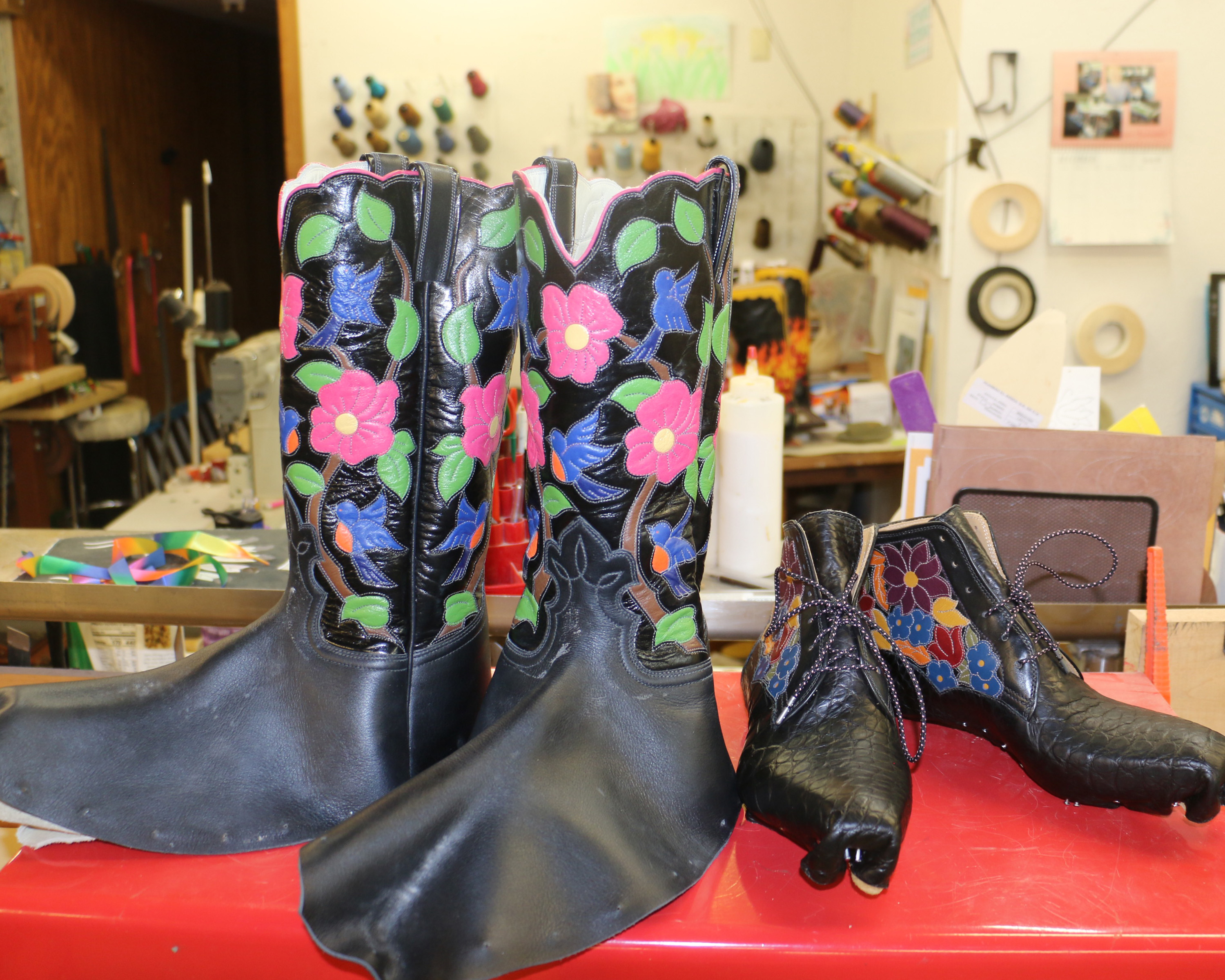
Both cowboy boots are side seamed now, and both lace-up boots are lasted. The little lace-up boots fought back and I’m glad to be done.
Do you ever have one of those days when you feel like you’re under water all day and everything is hard? That was today for me. I pressed through to get one of these side seamed and then decided I’d tempted fate long enough; I’ll do the other one tomorrow.
Also, I didn’t want to crop out my Louvin Brothers albums so that meant leaving you a nice view of my random-stuff-plus-some-junk shelves.

You may notice that these boots are completely different than anything I’ve ever made before. I could see in my head exactly how I wanted them to look but I didn’t know if I had the skills to pattern them. Hey, it only took me three tries and I learned a lot! Let’s hope I remember some of it in case I ever need to do anything like this again.
Other than a slight curve at the top of the boots, the side seams are a straight line. All of the curves in the ankle area were creating by “springing” the pattern — positioning the front and back tongue in a way that forces a curve into the boots. One side seam has a sewn-down band covering the seam and one is a band that disguises a hidden zipper.

When I purchased this hand-dyed indigo alligator, I pinned a note to it reminding myself that whatever I made from the leather would be named “Crash Course in the Blues.” It’s a Steve Wariner tune with the line “she was a California angel wearing alligator shoes” although I always sang “boots” instead of “shoes.” I thought maybe a customer would come along for this piece of alligator but they never did so I claimed it for myself.
Now “Crash Course in the Blues” belong to me!
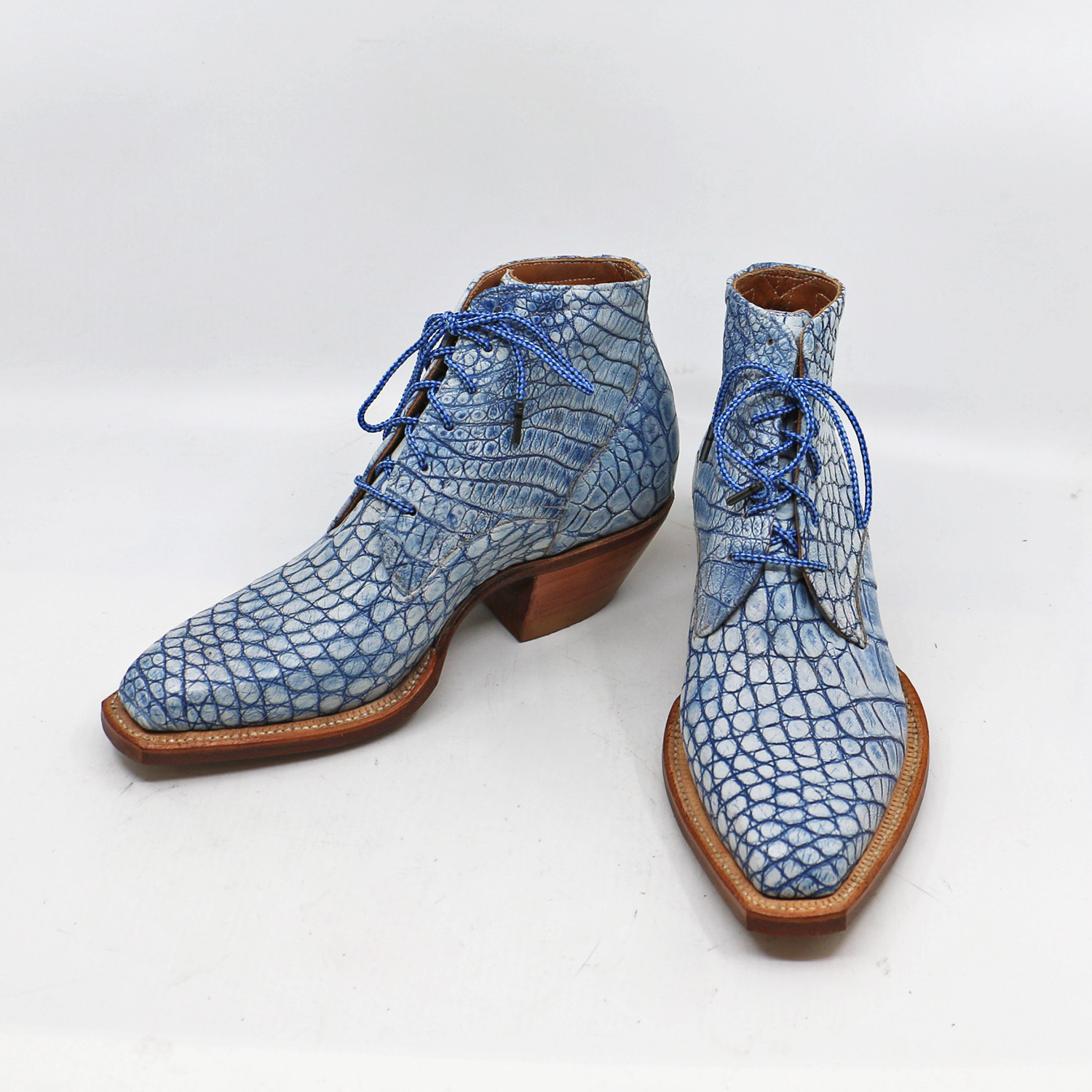
I almost got some boots finished today.
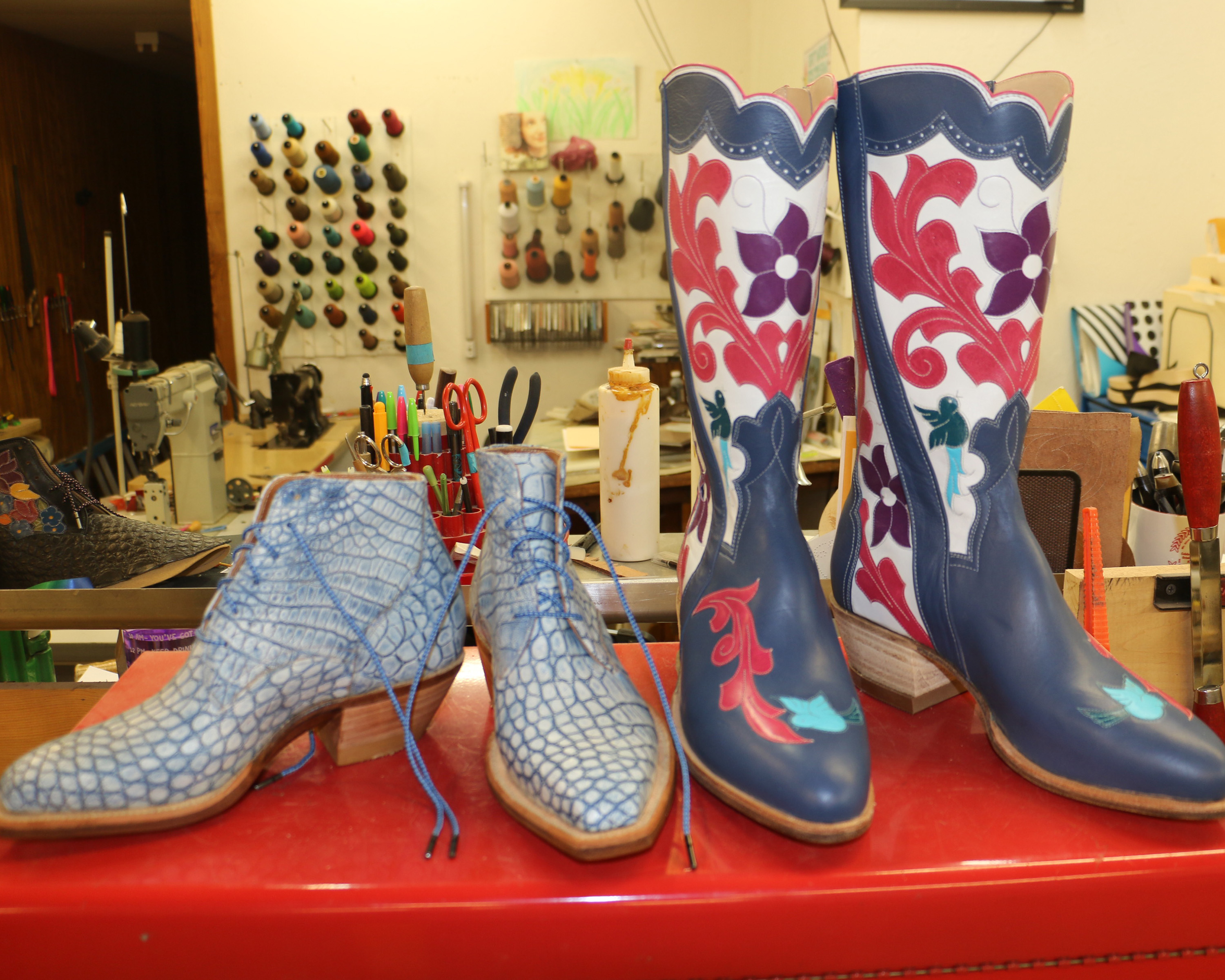
This is my original design and I feel it’s the best design I’ve ever done.
I was trained in design by Jay Griffith, who worked with Archer La Force, who worked with Gus Blucher, one of the early cowboy boot makers. I don’t remember ever seeing asymmetry in the work of Kansas boot makers — that appears to have entered the cowboy boot design lexicon through the work of the Mexican/border makers. It took me a long time to use asymmetry, especially in my flowers. I was trained to make very carefully symmetrical flowers but one day I stopped doing that and it improved my work immensely.

I blithely decided I’d put all the inlay pieces into these boot tops, but it took me 45 minutes to do one so I’ve decided to save the other three for another day and go home. The biggest challenge when positioning inlay pieces in a boot top like this is the fact that there are so many inlay holes and not much top remaining so it’s delicate and wants to wiggle out of shape. I spent a lot of time fighting that and more time remembering which pieces went where and which order they needed to go in. With these lessons learned it should go faster next time.

It’s been a long time since I’ve been this excited about a new design — I abandoned my responsibilities and customer orders to make these little boots. I think the reason they intrigue me so much is because I completely ignored the traditional way I’ve always started a design.
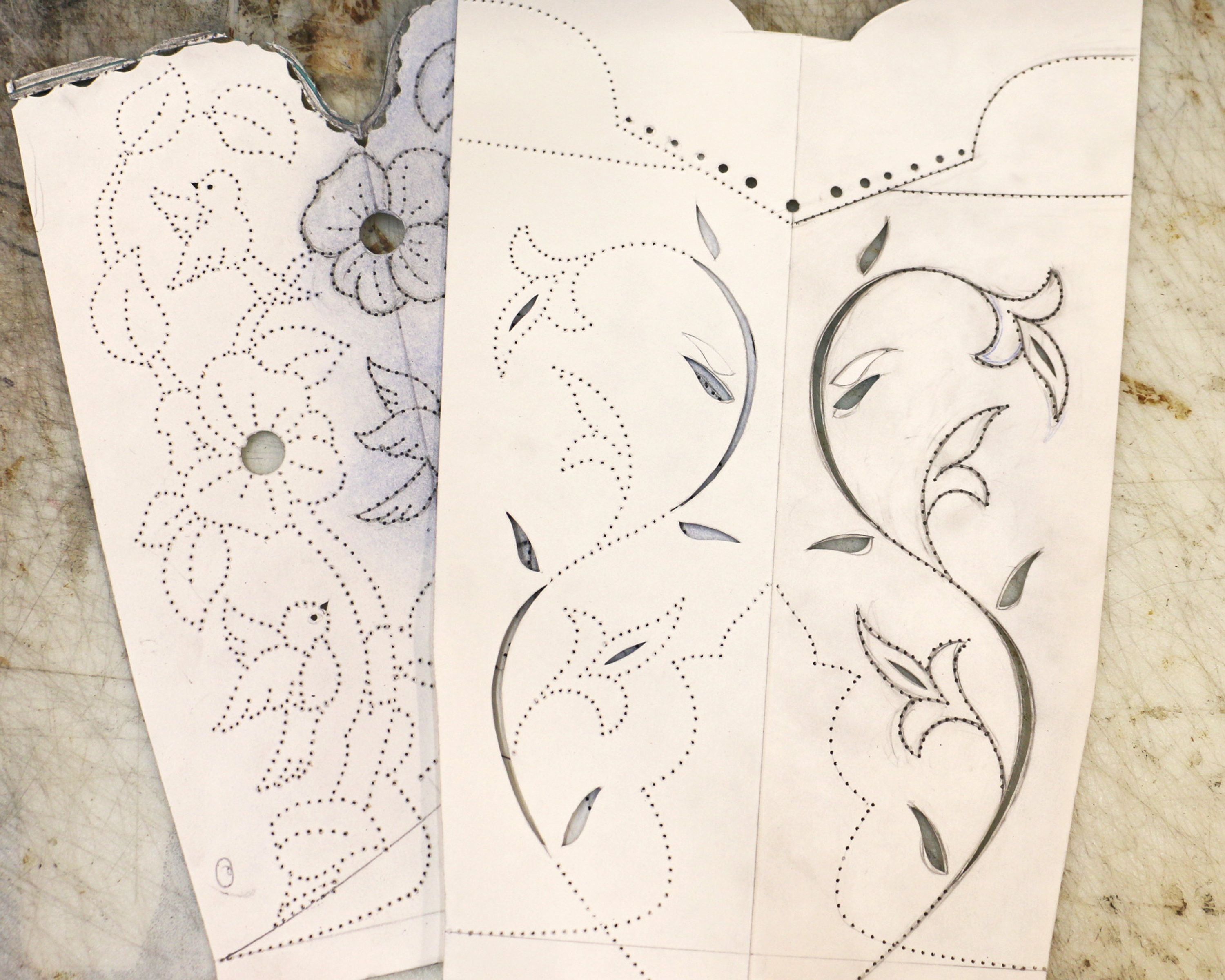
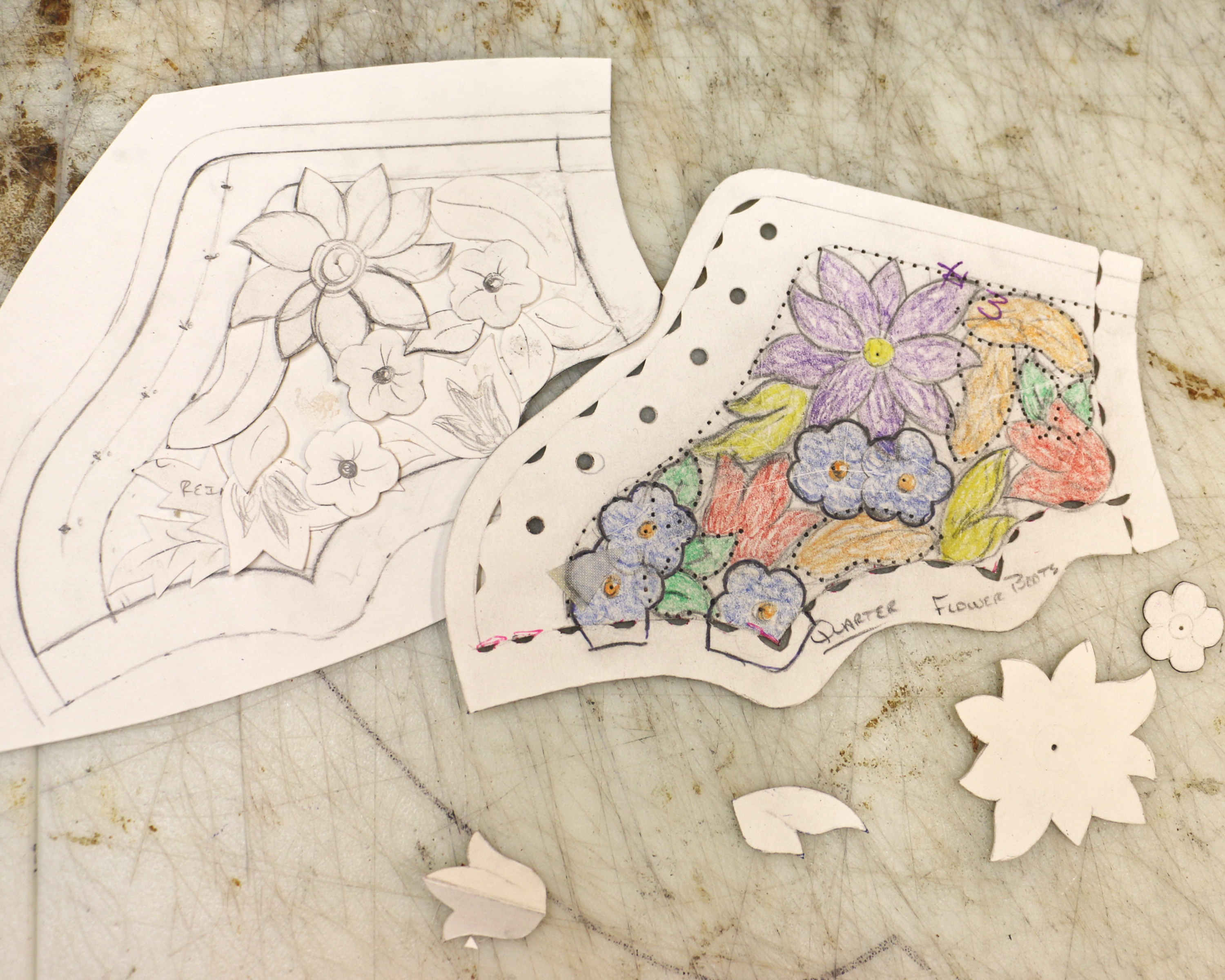

Whoops, I got distracted and started a pair of lace-up boots for myself because I couldn’t get them out of my head.
Also, are these not the coolest things you’ve ever seen?!?
Possible answers:
Yes
YES!
Why is this even a question of course yes.

This customer said he didn’t mind bright colors so I’ve taken him at his word.

 | 118. Crafting Cowboy… on Jay Griffith |
 | customboots on Inspiration |
 | gleaming00e65375c7 on Inspiration |
 | Olivia Henson on All through sewing |
| customboots on So many rows |
 Lisa Sorrell, cowboy boot maker