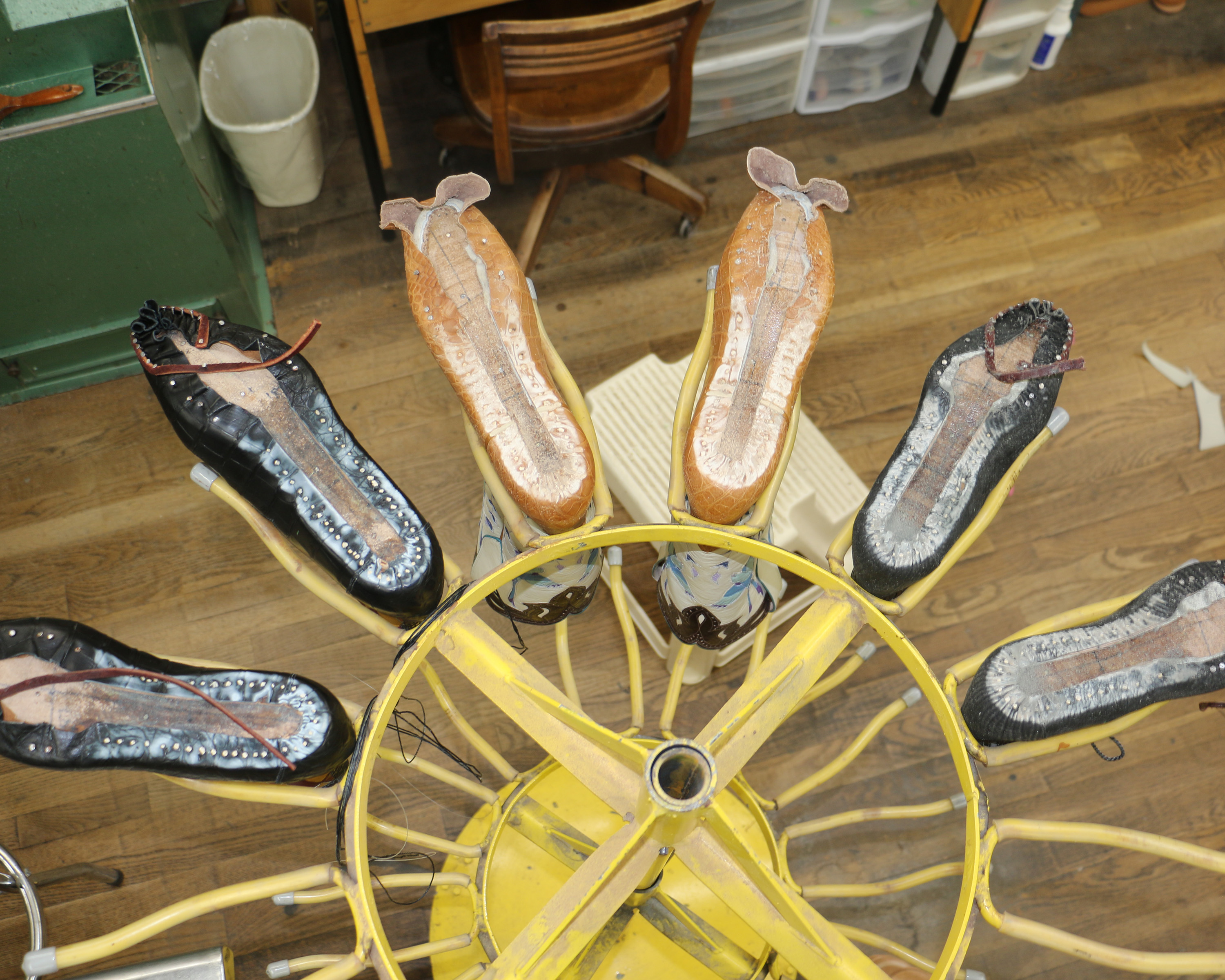
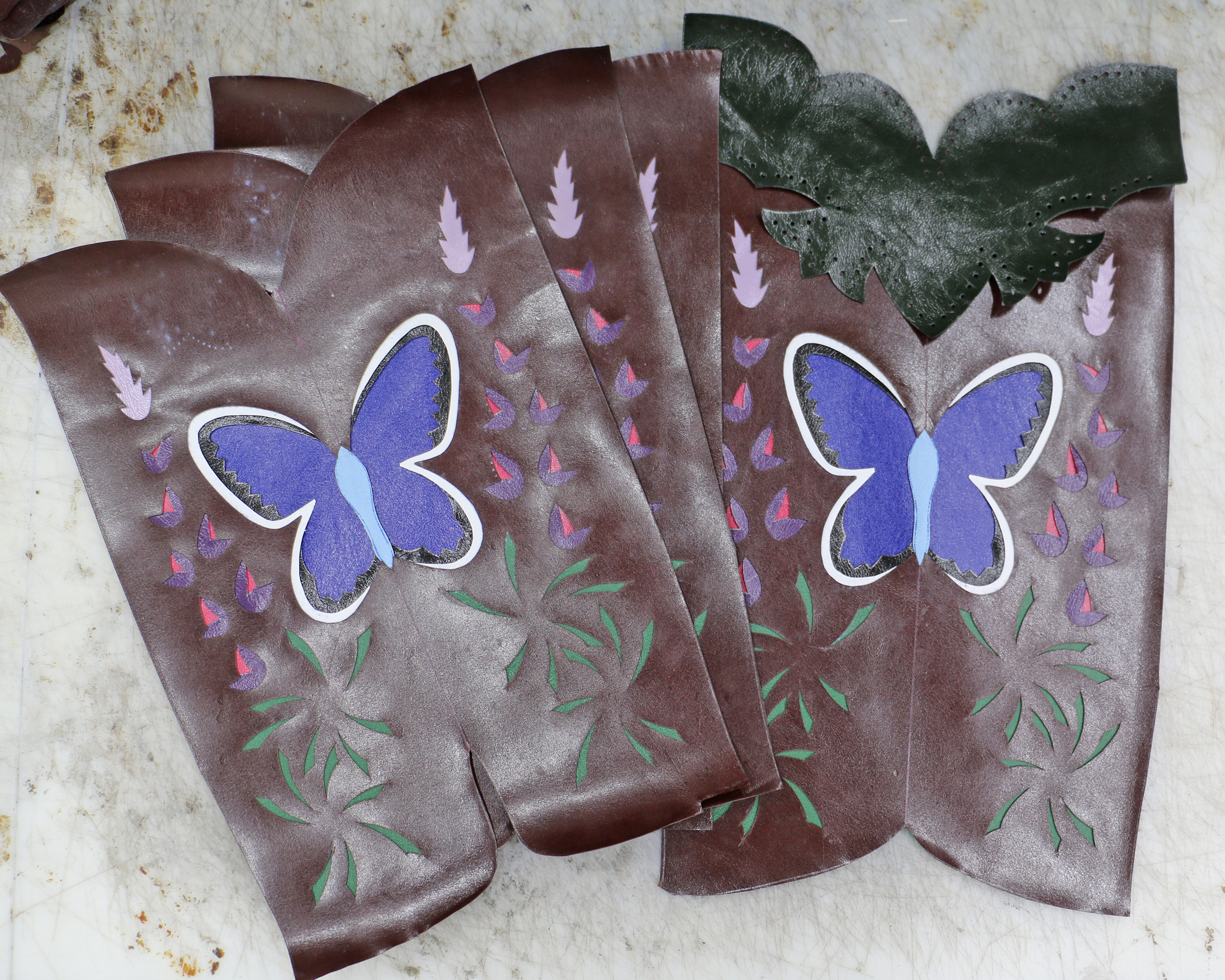
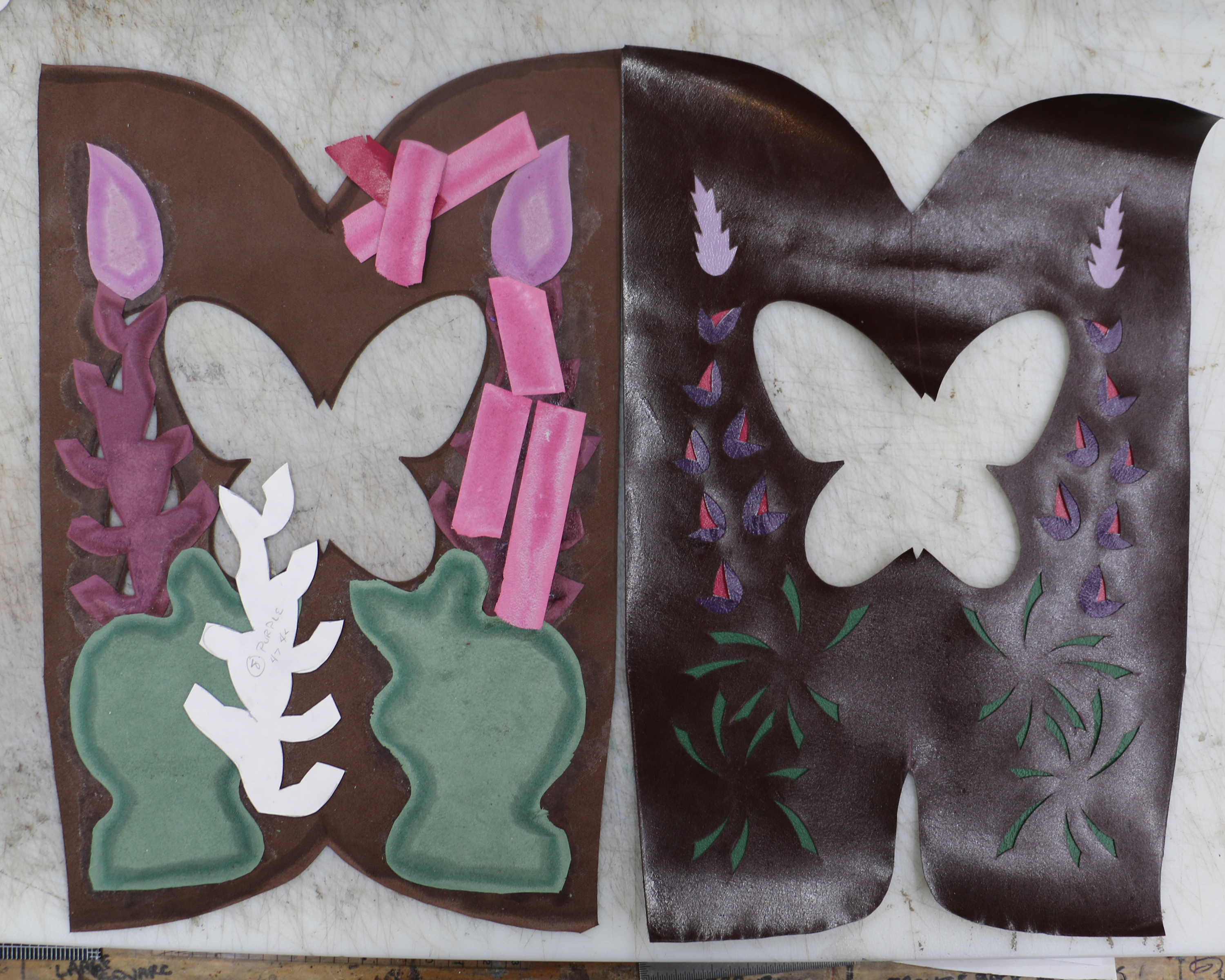
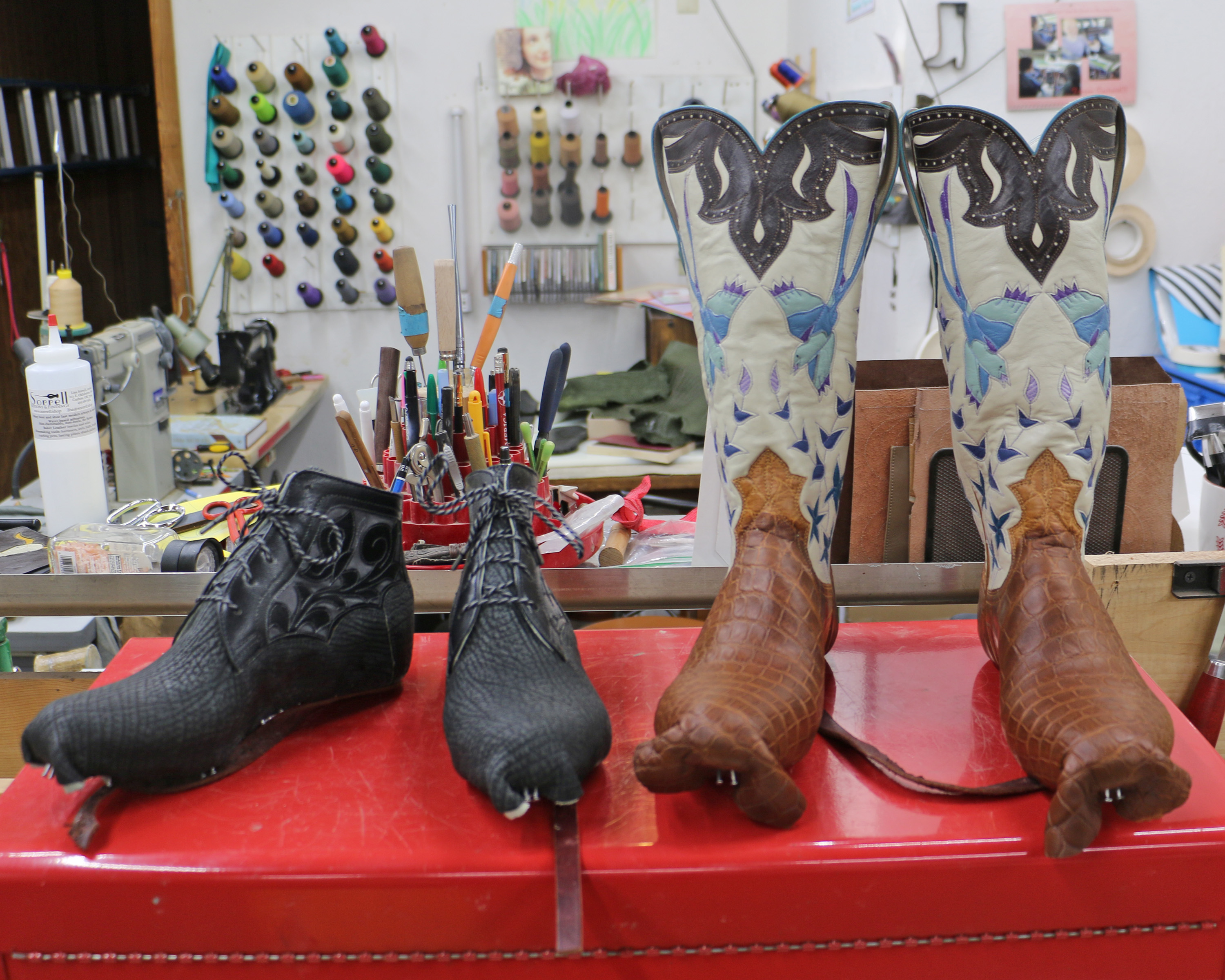
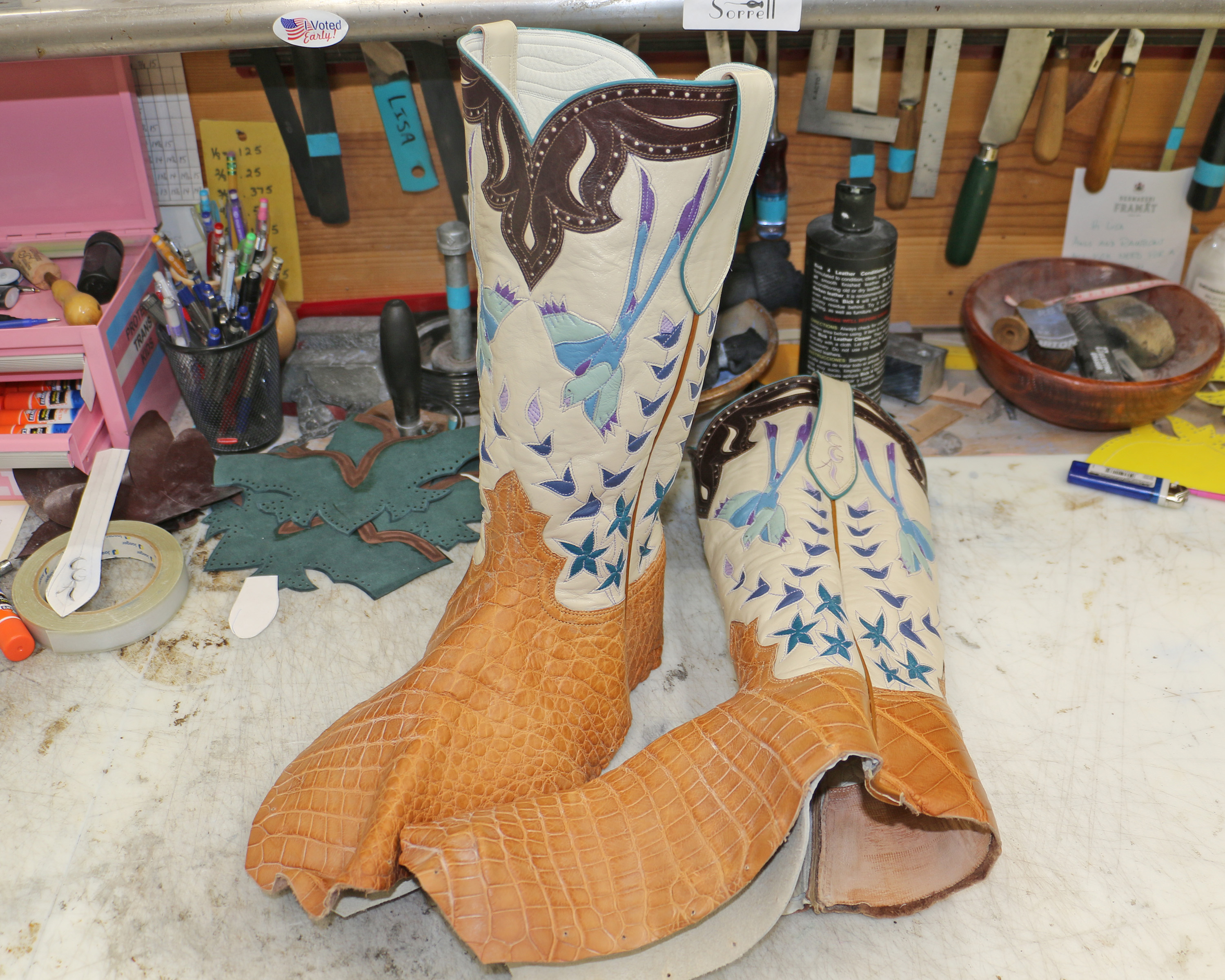
I wasn’t really feeling like a person who wanted to work today* so I decided to inseam because it’s my favorite thing. I put on the Osborne Brothers and they sang me through the afternoon.
*I felt like an independently wealthy person of leisure but my bank account said LOL, no.
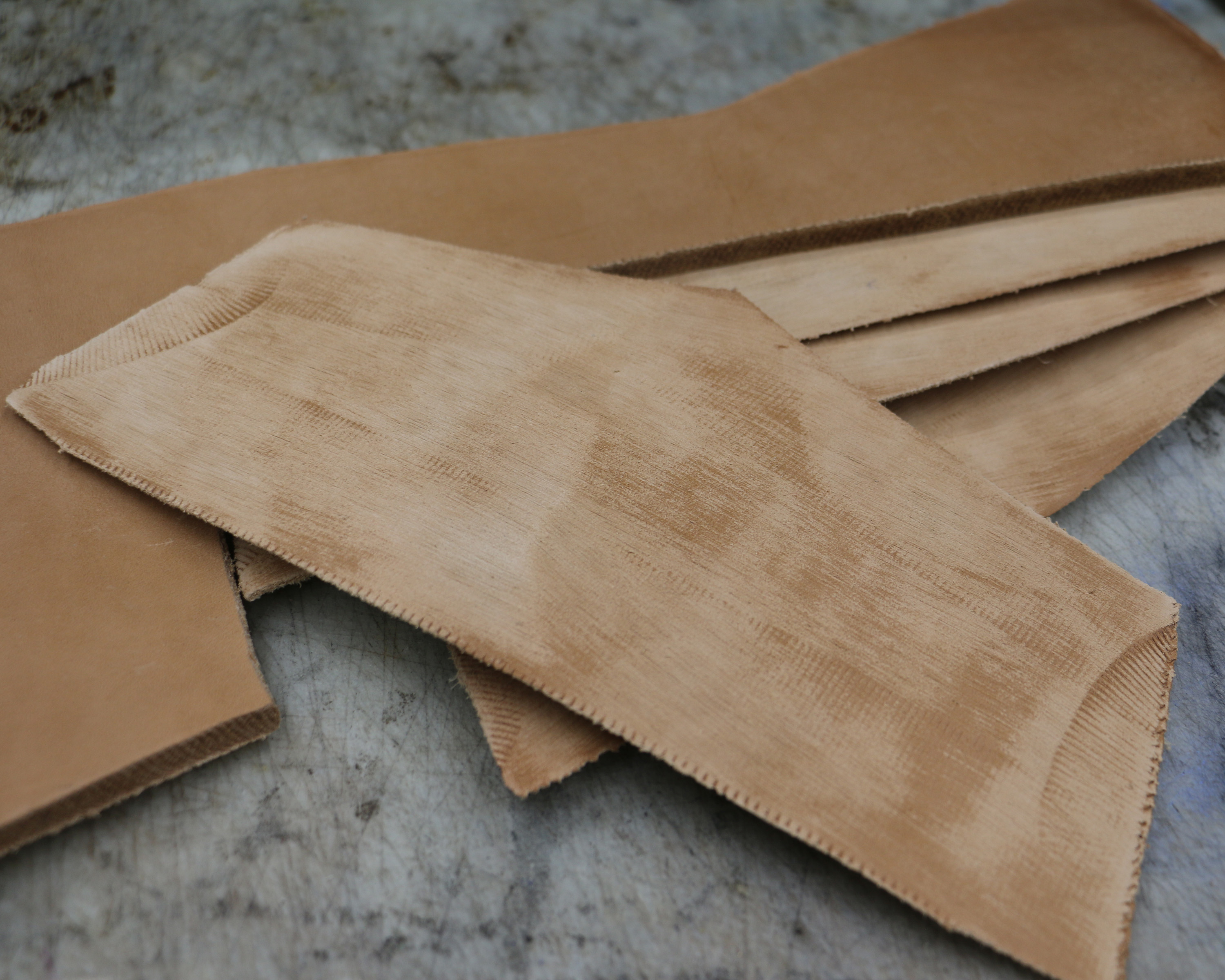
The Counter (also called Heel Stiffener in Europe) is the firm piece of leather or synthetic that supports the heel area of a shoe or boot. Cowboy boot counters are made from the same heavy, 1/4″ thick leather as soles. Leather shoe counters in bespoke shoes are about 1/3 the thickness and they’re typically dampened and then split (made thinner, if the leather’s too heavy) and skived (thinned along the edges at an angle). Cowboy boot counters are skived along all the edges but they’re left full thickness in the center. It can be done with a knife but most boot makers use a sander to do the shaping.
Making counters is one of my least favorite jobs in boot making. My hands are always cramping by the time I get a pair sanded, especially if they’re large and I’m doing more than one pair. It’s important to get it right; you want that thickness in the center but you must carefully calculate where and how much to sand away. Leave it too thick and you’ll never get the boots on the last in the heel area, take away too much and the boots won’t properly support the heel.
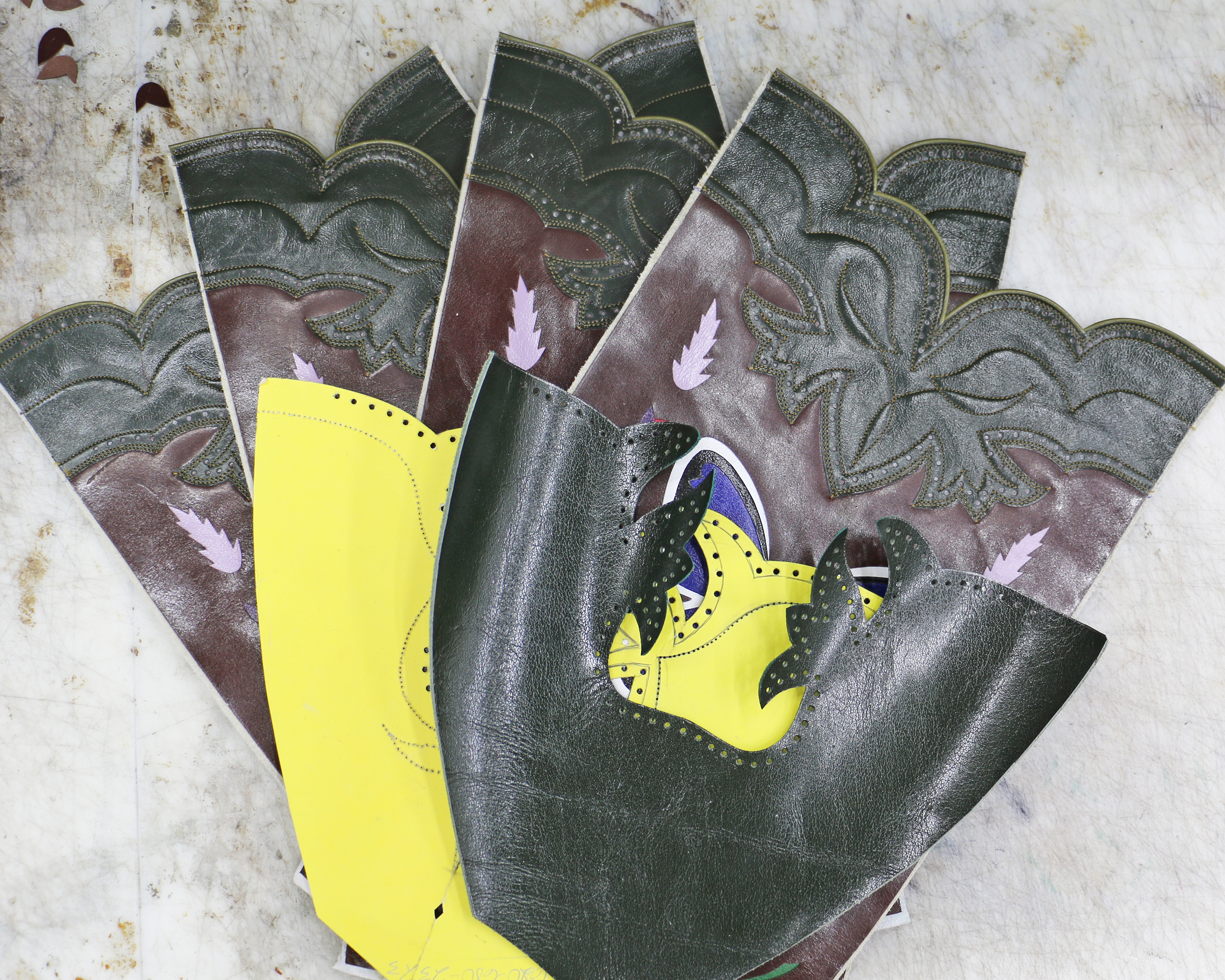
I copied this wingtip design from a vintage boot (maker unknown) and it’s always been one of my favorite wingtip shapes. It was fun to reimagine it as a top band also for this pair of boots.
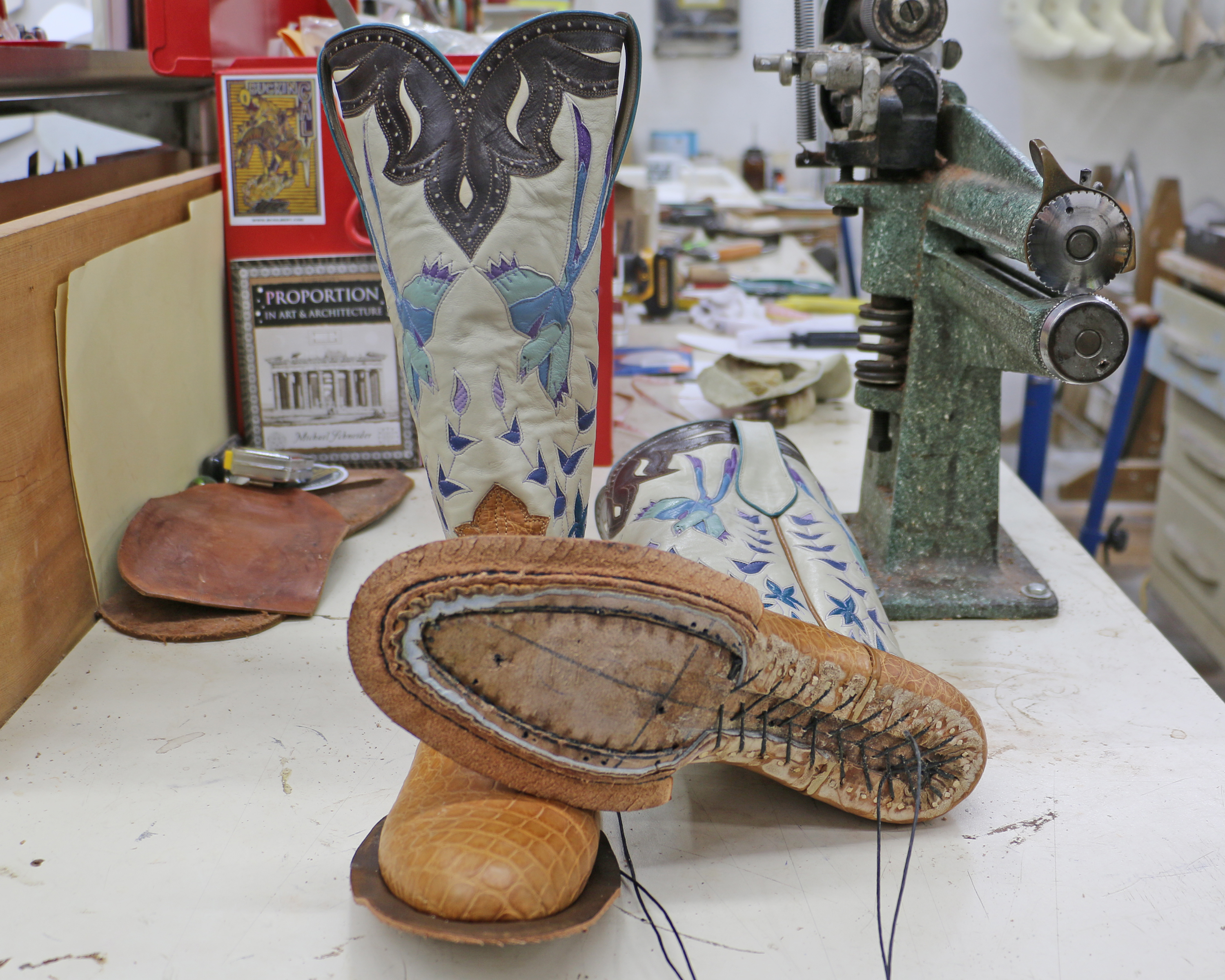
Several years ago a potential customer brought in a pair of boots made for him by a Texas boot maker named Don Atkinson. The boots were beautiful; I particularly noticed how smoothly they joined at the sole and I realized I needed to do a better job in that respect. Since that day I’ve been much more careful in preparing the boots for the sole, making sure there are no bumps or wrinkles and the leather is carefully sanded so the sole will adhere, and I often think of him when I’m doing that process.
As far as I can remember I never met Don Atkinson, but a few days later I sent him a note telling him how much I had admired his work and how it inspired me to do better. I didn’t hear back from him but several months later his widow called. She said he’d died not long after my note arrived but she was calling to let me know that my words had meant a lot to him.
There are a few steps to be done before I lay the soles on these boots, but the foundation for the sole is smooth and clean, as Don would have wanted.
Here’s another little lesson. It’s tough to accurately cut and lay in a narrow border; it’s easier to add a big piece of leather and then cut the border.
A few days ago I decided to at least try to improve my diet; Depression and its sly sibling Apathy make it easy to just not care. Today I lasted these boots and my hands are only gently whispering to me instead of screaming, so perhaps it’s helped a little.
The side seams on cowboy boots are sewn with the right sides of the boots together so they’re inside-out. They’re turned (or wrestled) the right way out and then they’re ready to be put on the last, or boot form.